 Share
Share



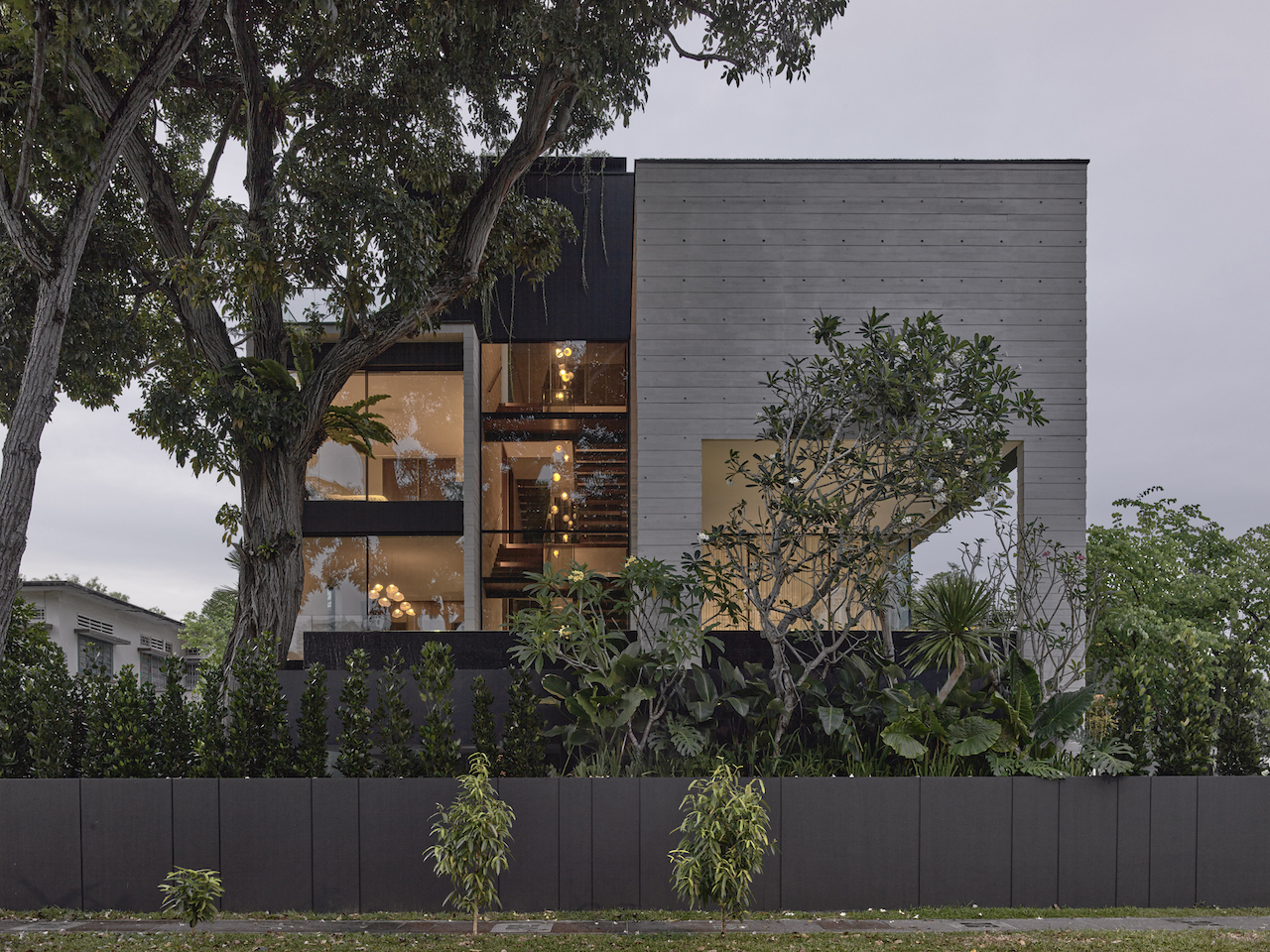
It is typically easier to start designing from tabula rasa. But if there is a special feature on the site, considering it in the scheme can lead to more unique and personal narratives. This was the case for this house for a couple with young children, and the special feature is a tree at the corner of the site.
“The tree at the front of the house is a 13m-high Tabebuia rosea, also known as the Trumpet tree or Singapore Sakura. This tree was the sole one originally on the property,” says Maria Arango, who founded ArMo Design Studio together with Diego Molina. This tree became the driver for the programmatic and formal aspects of the house. The clients wanted to maximise the Gross Floor Area (GFA) of the house for future proofing as well as to work within a current limited budget.
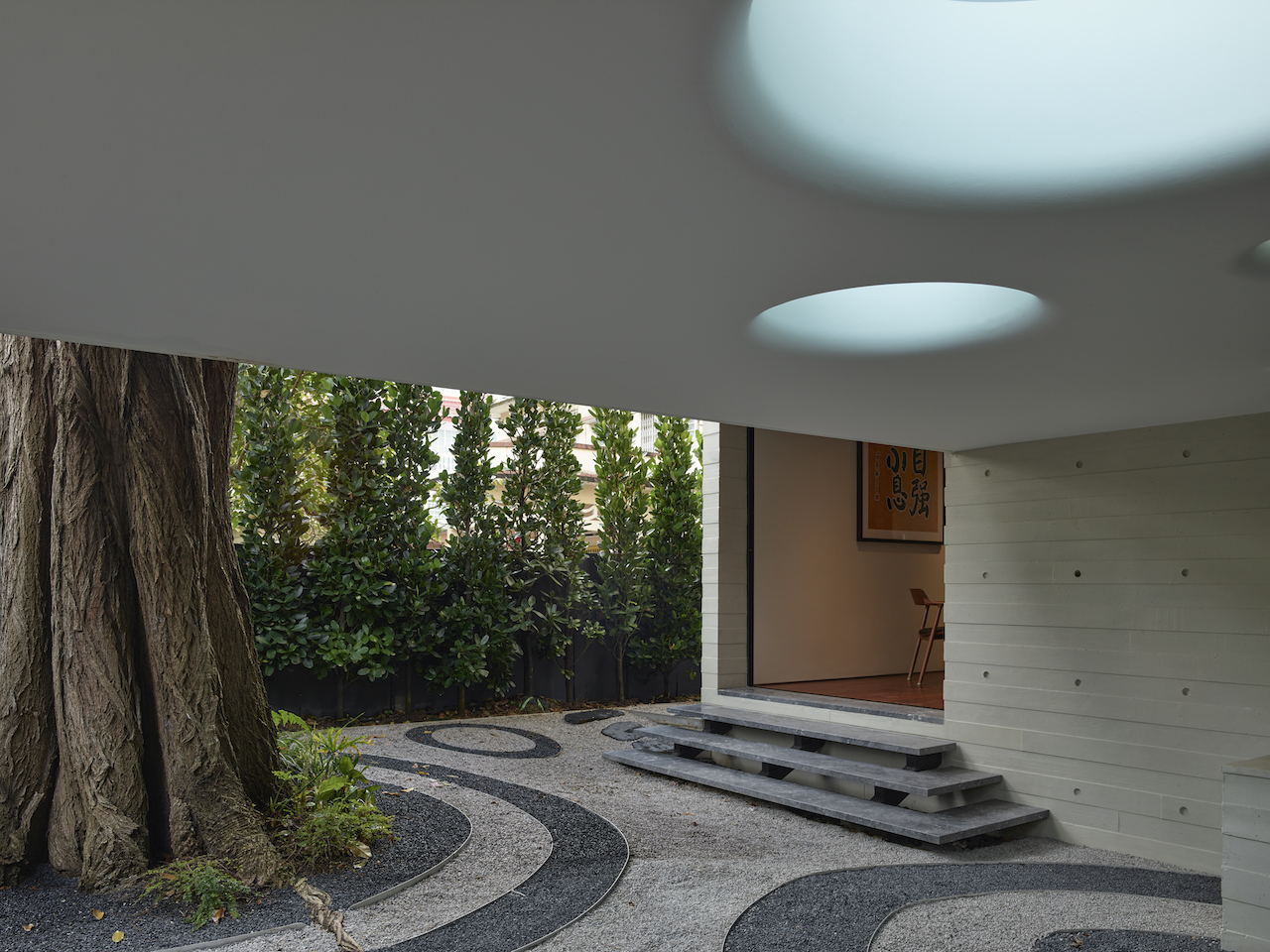 The design team detailed the ceiling of the canopy around the tree to reflect the concentric circles on the pebbled ground.
Needless to say, it was necessary to ensure careful preservation of the tree. The design team wanted to give it prominence from inside the house as well. There was also the need to elevate the ground level according to URA (Urban Redevelopment Authority) guidelines, given that the site is in a flood-prone zone.
Efficient layout that fuses nature
These manifold parameters resulted in an exposed basement level, with the first storey raised. The advantages of this were that the living and dining on the first storey have better views and ventilation. The swimming pool was raised to achieve the required 5m-perimeter protection zone around the tree, lining the house alongside the living room.
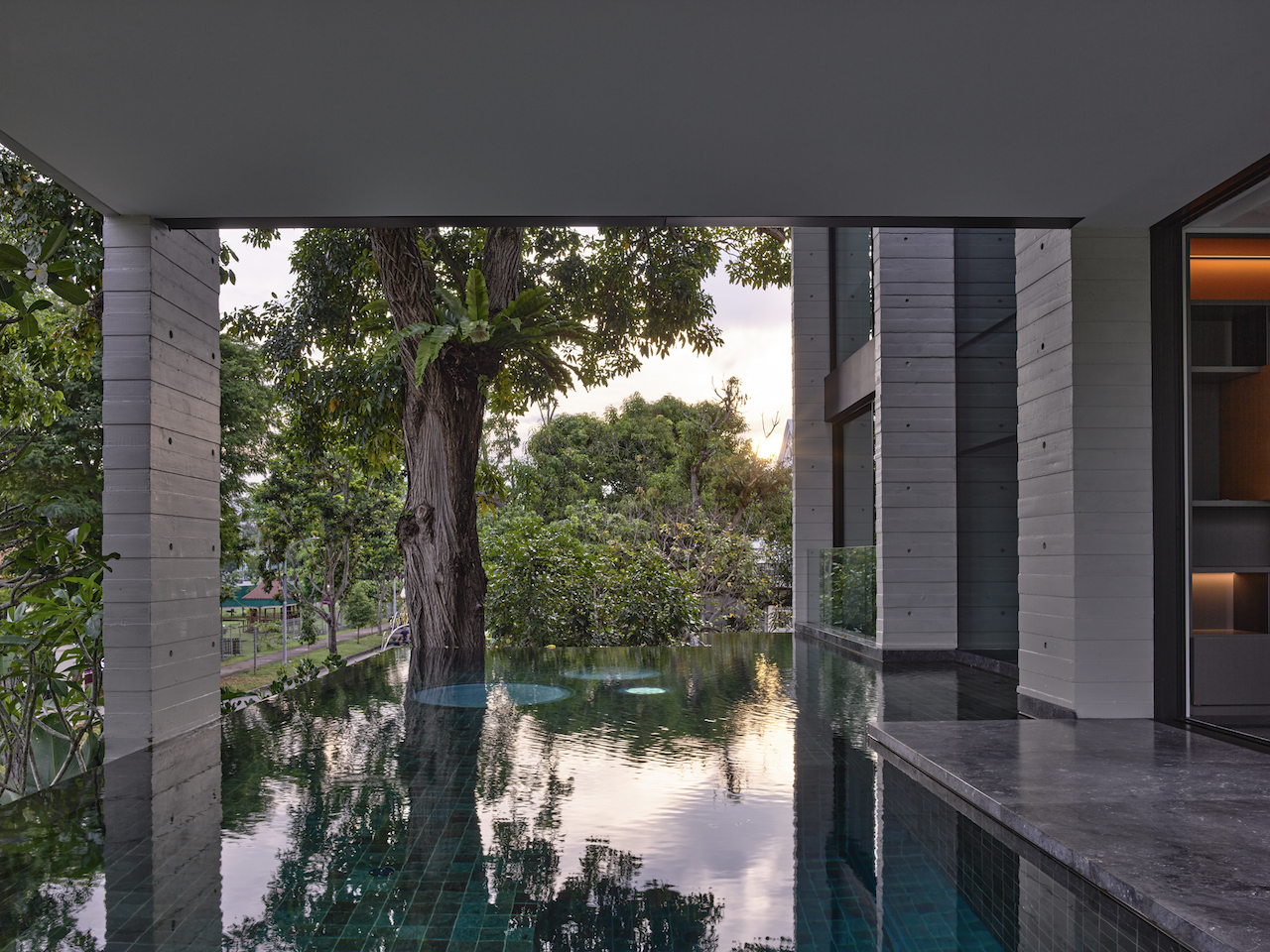 The elevated pool, with glass bottoms that bring light to the ground level garden that the powder room and study room looks out to.
The design team also aimed at creating the most efficient layouts possible on each storey. “Adopting an L-shaped footprint around the tree, the design strategically centralised vertical circulation to minimise long corridors and wasted spaces, and ensure ample light and a seamless connection to the tree,” says Molina.
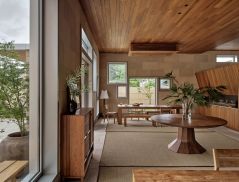
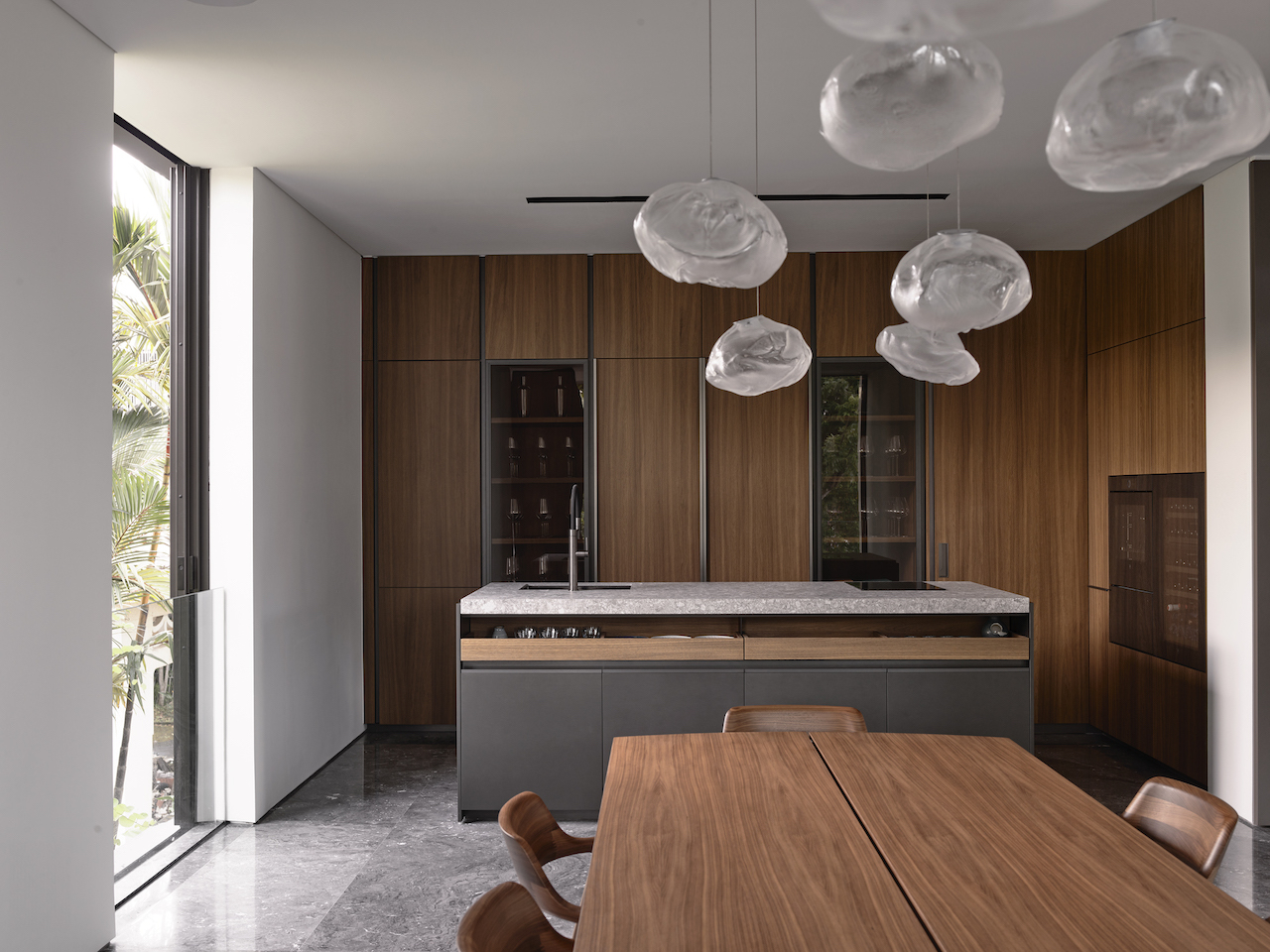
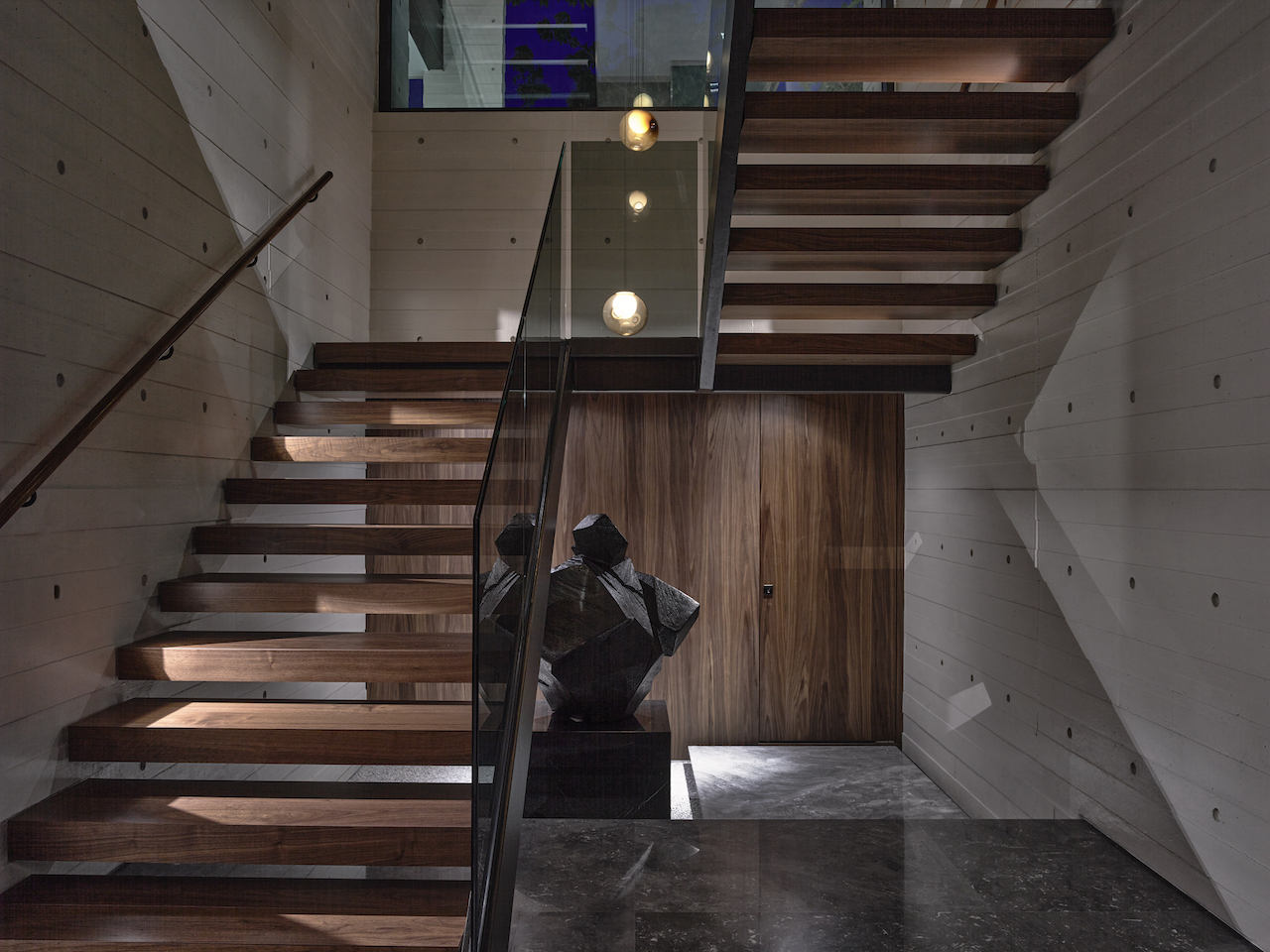
The lift-and-stair core is streamlined at the house’s centre, fronted by a glass façade facing the tree. In the dining room and dry kitchen area that enjoys this vantage point, a dramatic Bocci light pendant cluster floats in the space, catching the light and “accentuating the verticality of the staircase”.
The raised first storey gives an interesting twist in the spatial experience of the house. One enters from the car porch into a chic entertainment space, where a long bar counter is enhanced by a glass window to the tank of the pool. The serviced spaces and study room-cum-home offices were also placed on this storey.
The latter enjoys the view of the tree’s textured base through large glazing. As conventional landscaping was impossible to preserve the tree’s roots, a rock garden was formed at its base, accented with concentric circles in the manner of a Japanese Zen garden. The powder room, while tucked below the staircase, is a poetic space as it also enjoys view of this garden.
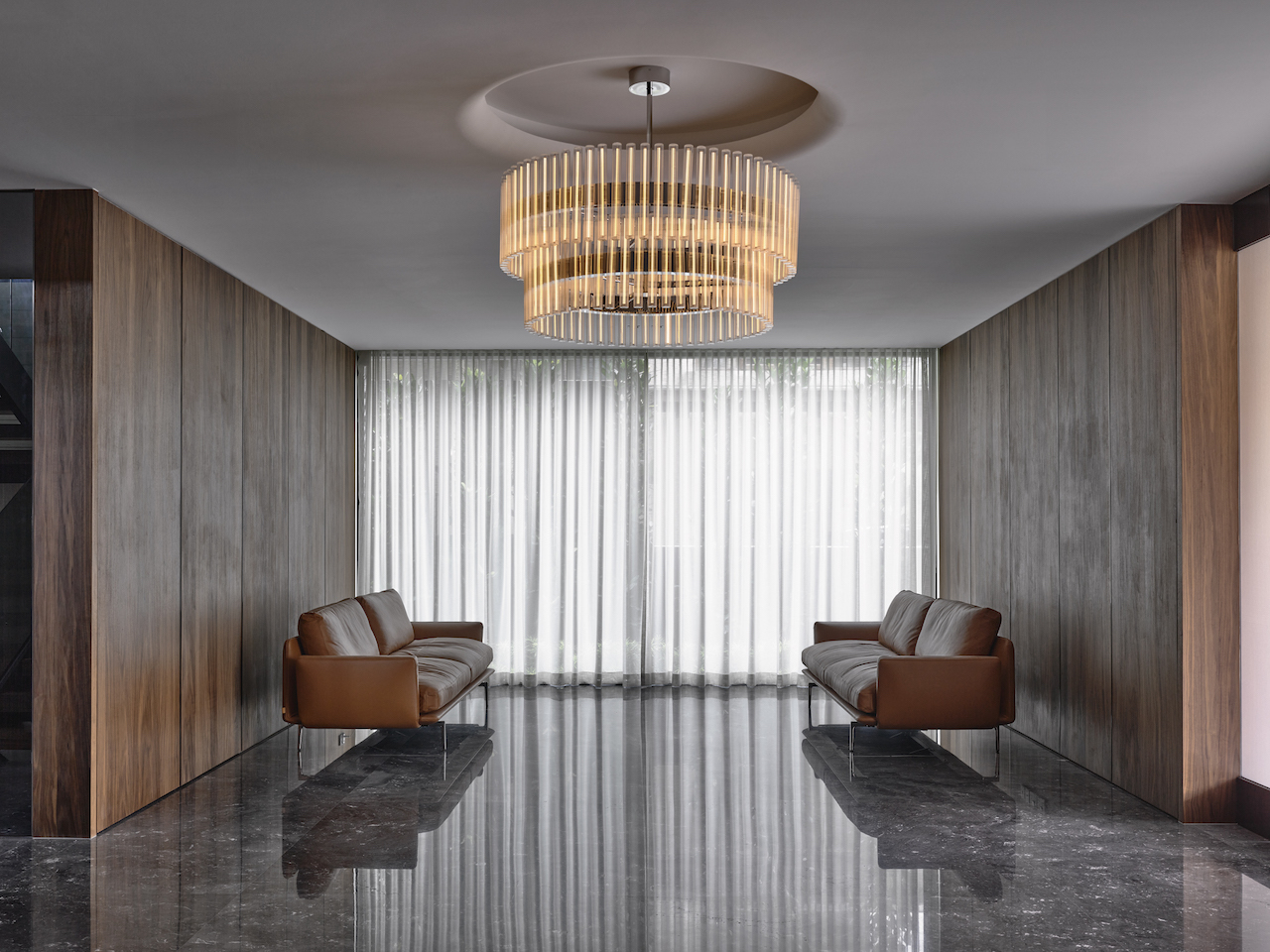 The road-level basement contains an entertainment space.
“The design of the powder room and its relationship to the rear garden and tree was a thoughtful and innovative approach to integrating nature into the architectural space. Positioned at the basement level, the powder room became an intriguing design element with its own private Zen garden,” describes Arango.
The second storey contains bedrooms, the family room and the tree-facing master bedroom suite. The attic has a guestroom suite as well as two capacious terraces. The roof terraces were a solution to stretch the ground level program as much as possible to achieve the maximum GFA.
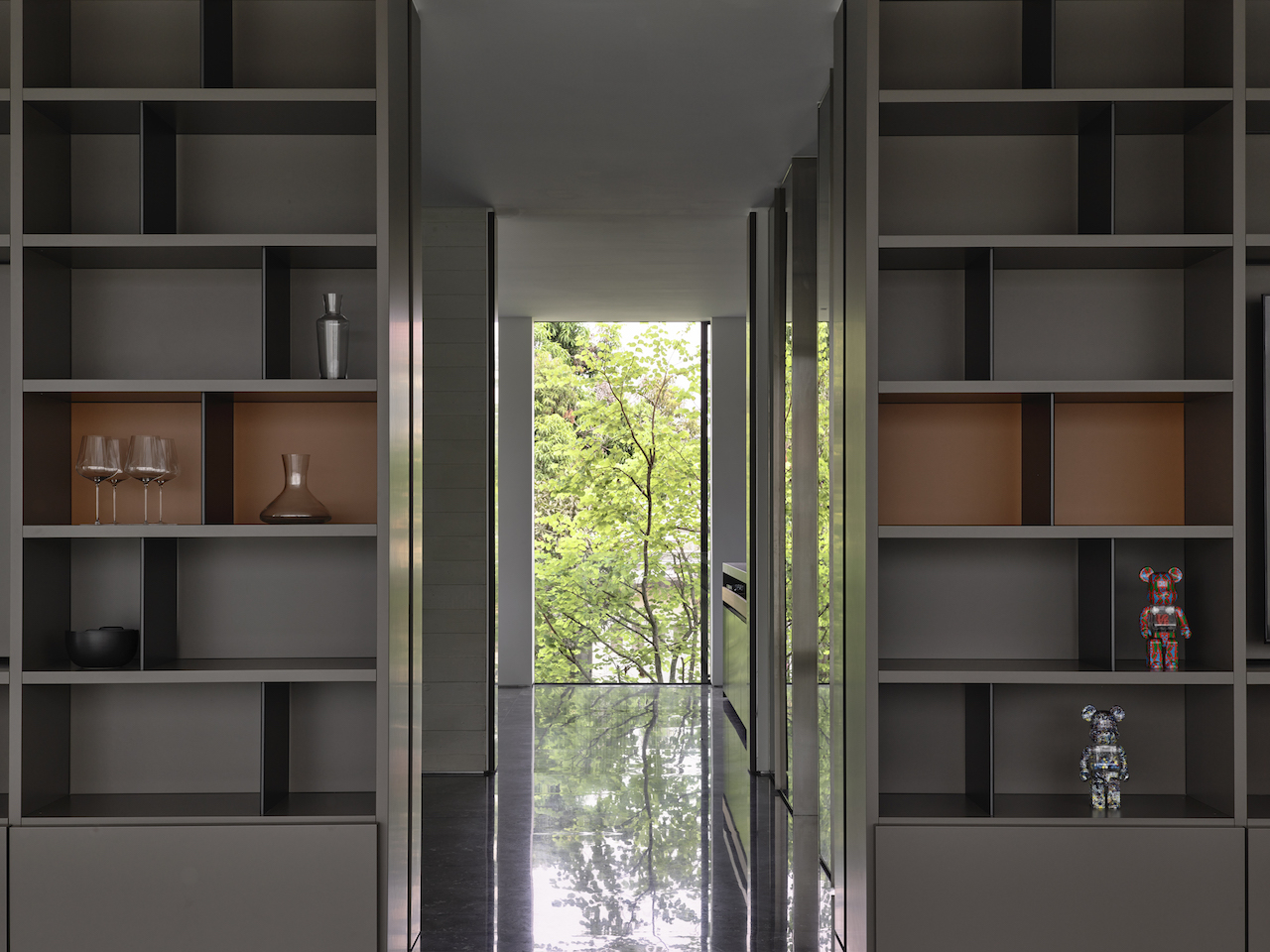 View from the living room looking toward the dining and dry kitchen area; the library uses Molteni 505 shelving.
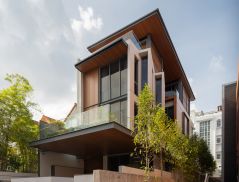
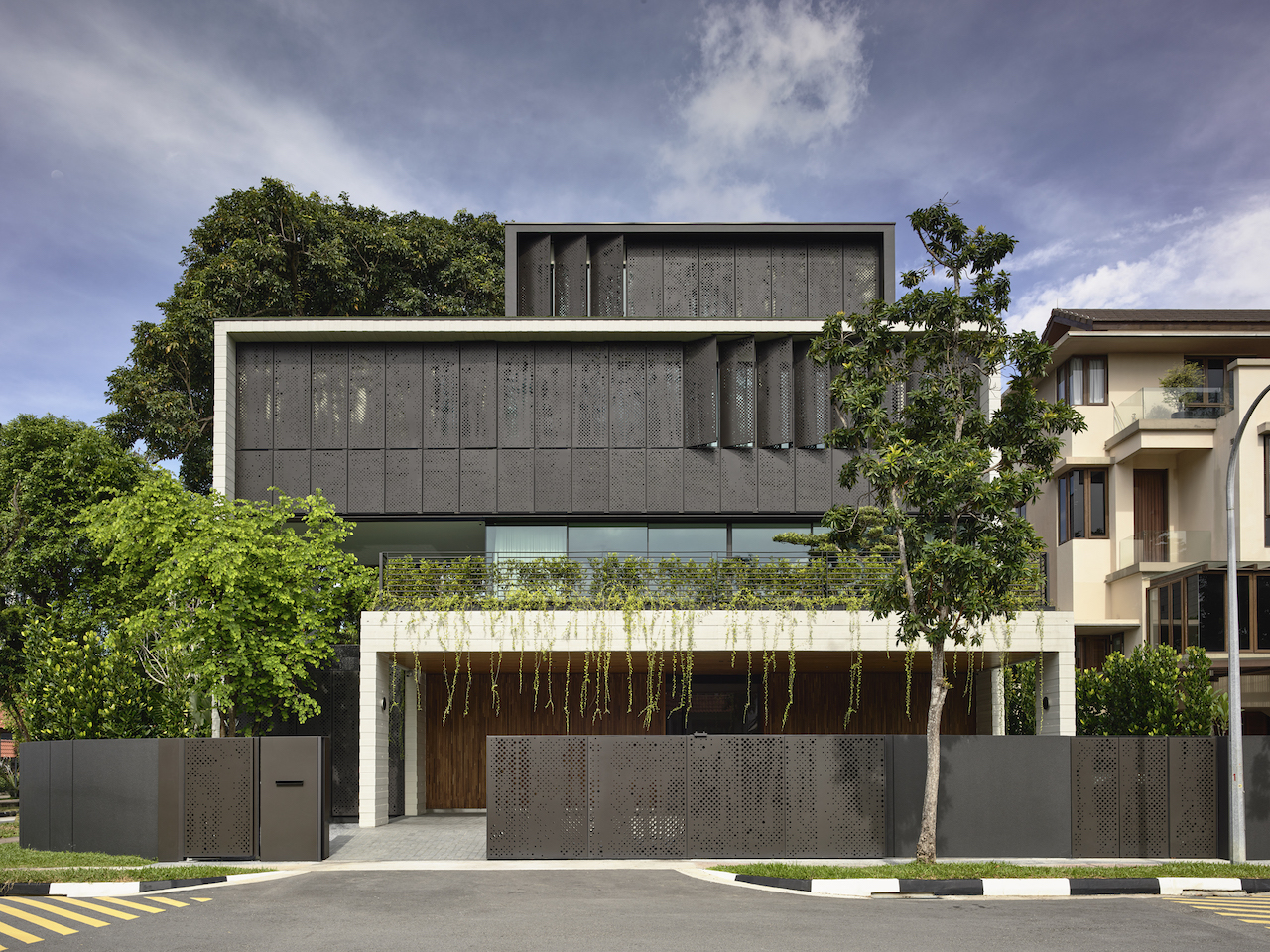
The house is situated on a corner plot, with the main gate facing the main road and the other side facing a kindergarten across a smaller road. This determined the house’s architectural character, with the main road-fronting elevation defined by robust concrete walls and an aluminium screen. The kindergarten-facing side facing south could be more permeable with more glass facades, as the tree and its foliage create a natural buffer.
Eco-conscious abode
The house has many ecological credentials. “Like most of our projects, the house is designed with passive sustainable solutions, such as cross ventilation on every floor, and with most openings being south facing. The façade that faces west [along the main road] is protected by the screen, and all external aluminium doors-and-window panels are double-glazed, with a low e-coat coating to reduce heat transmission and protect from UV rays coming into the house,” lists Molina, adding that this also insulates well against noise.
The swimming pool uses salinated water as a more environmentally friendly alternative to traditional chlorinated pools. Arango explains, “It provides benefits for both swimmers and the surrounding ecosystem as it uses and discharges less chemicals to the environment. It is also less irritable to the skin.”
This project was a complicated one but gave to a singular architecture. “Despite the challenges, the end result of the project aligns harmoniously with the site’s characteristics and requirements. Through innovative design strategies, unique spaces were created that not only fulfilled the functional needs of the residents, but also enhanced their living experience,” Molina reflects.