 Share
Share



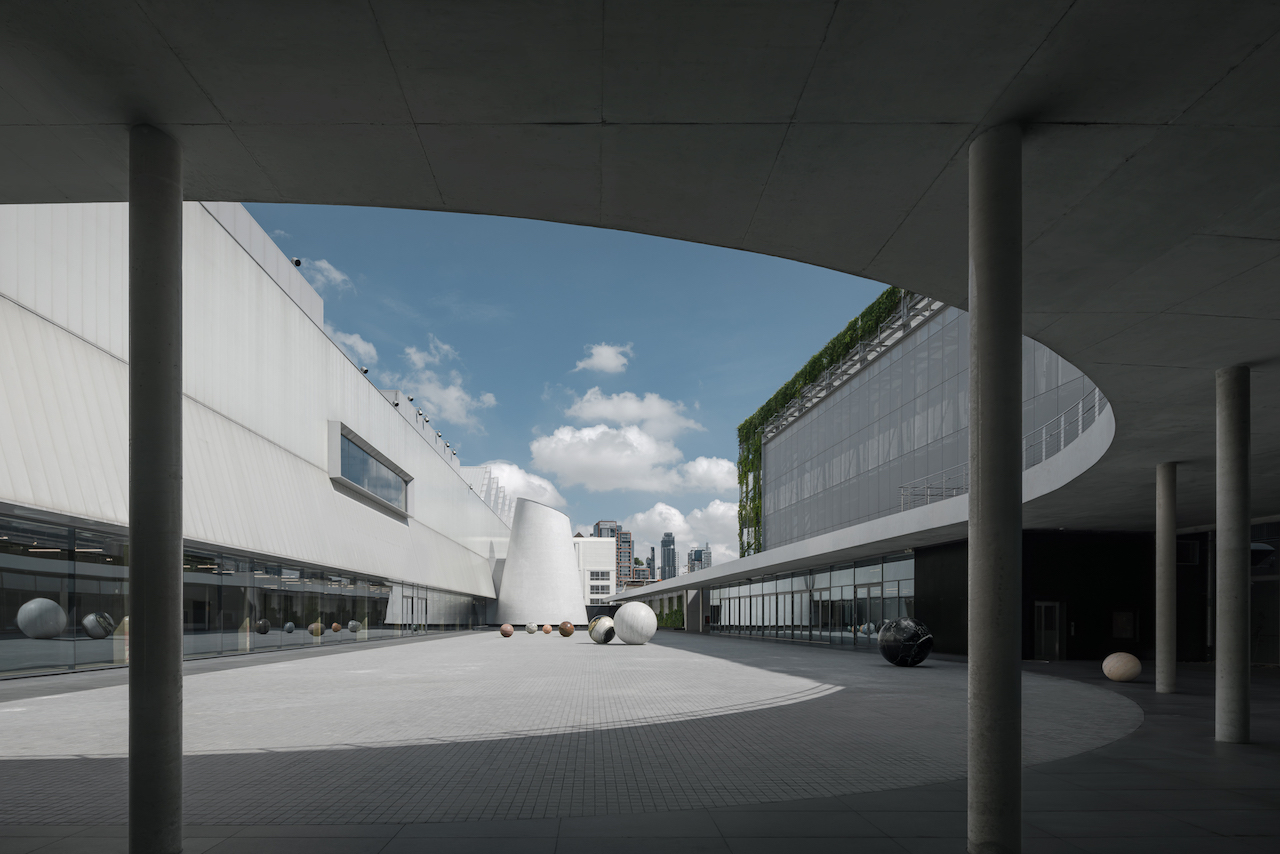
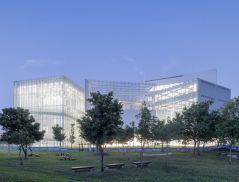
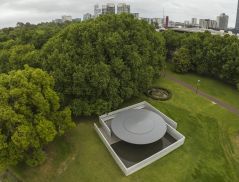
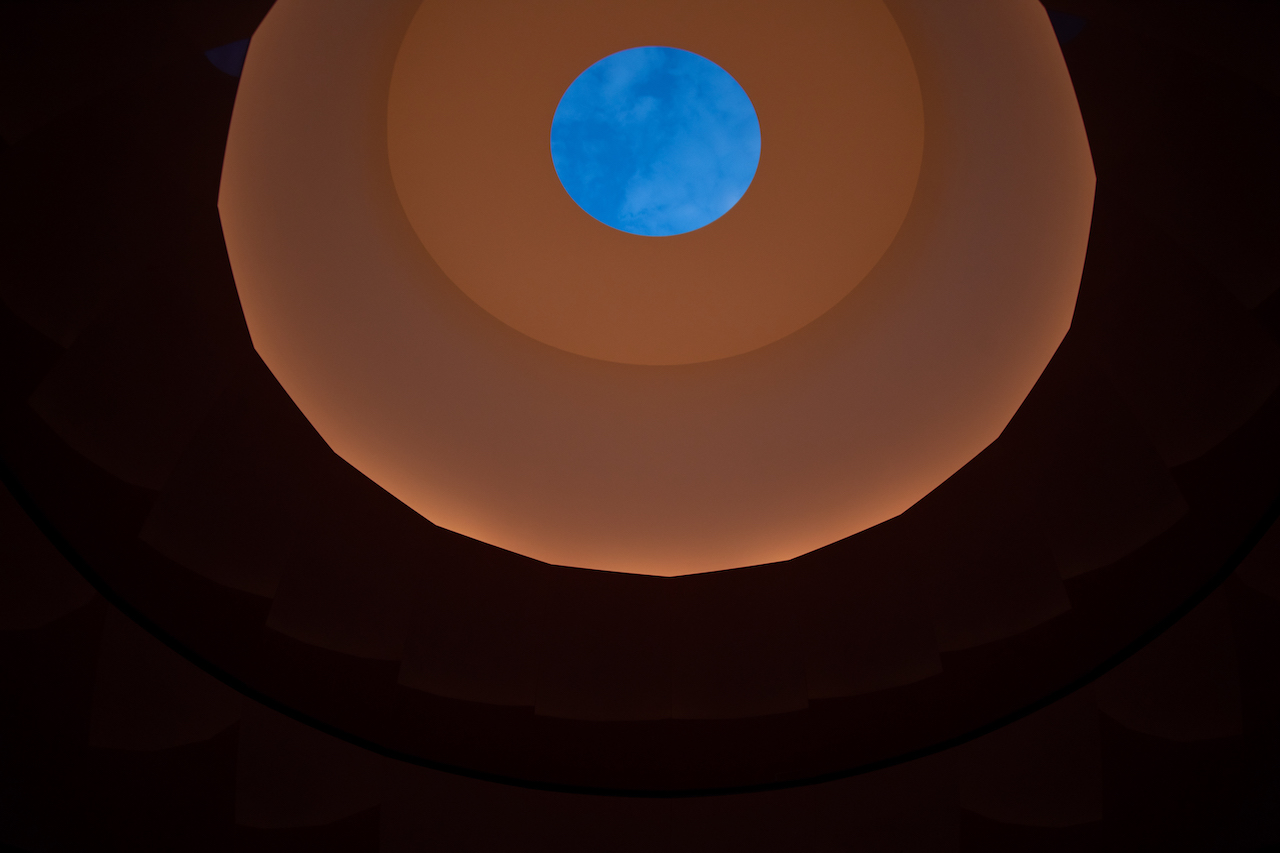
Standing in the courtyard of Dib Bangkok, it is hard to imagine that beyond the walls lie the city’s cacophonous streets, laced with telephone poles and wires. Assorted stone balls from Alicja Kwade’s Pars pro Toto artwork mark the void like a snooker game writ large, and the museum’s white elevations induce a sense of calm. This contemplative atmosphere culminates in the ‘Chapel’ hosting James Turrell’s Straight Up installation.
Dib Bangkok is the city’s first international contemporary art museum in Khlong Toei in east Bangkok near the port; it is also the first in Thailand to showcase its own world-class collection of global contemporary art. WHY Architecture, led by founder and Design Director, Kulapat Yantrasast, conceived the transformation. He founded the firm in 2014, which now operates offices in Los Angeles, New York, Bangkok and Paris, working globally on impressive art building projects. Dib Bangkok was a dream of the late-businessman, Petch Osathanugrah, who was a pivotal supporter and collector of contemporary Thai artists. His son, Purat Osathanugrah, realised this vision with a building that is as emotive as it is evocative, tying back to his father’s legacy, while sharing the long-unseen private collection of Thai and international contemporary art with the public.
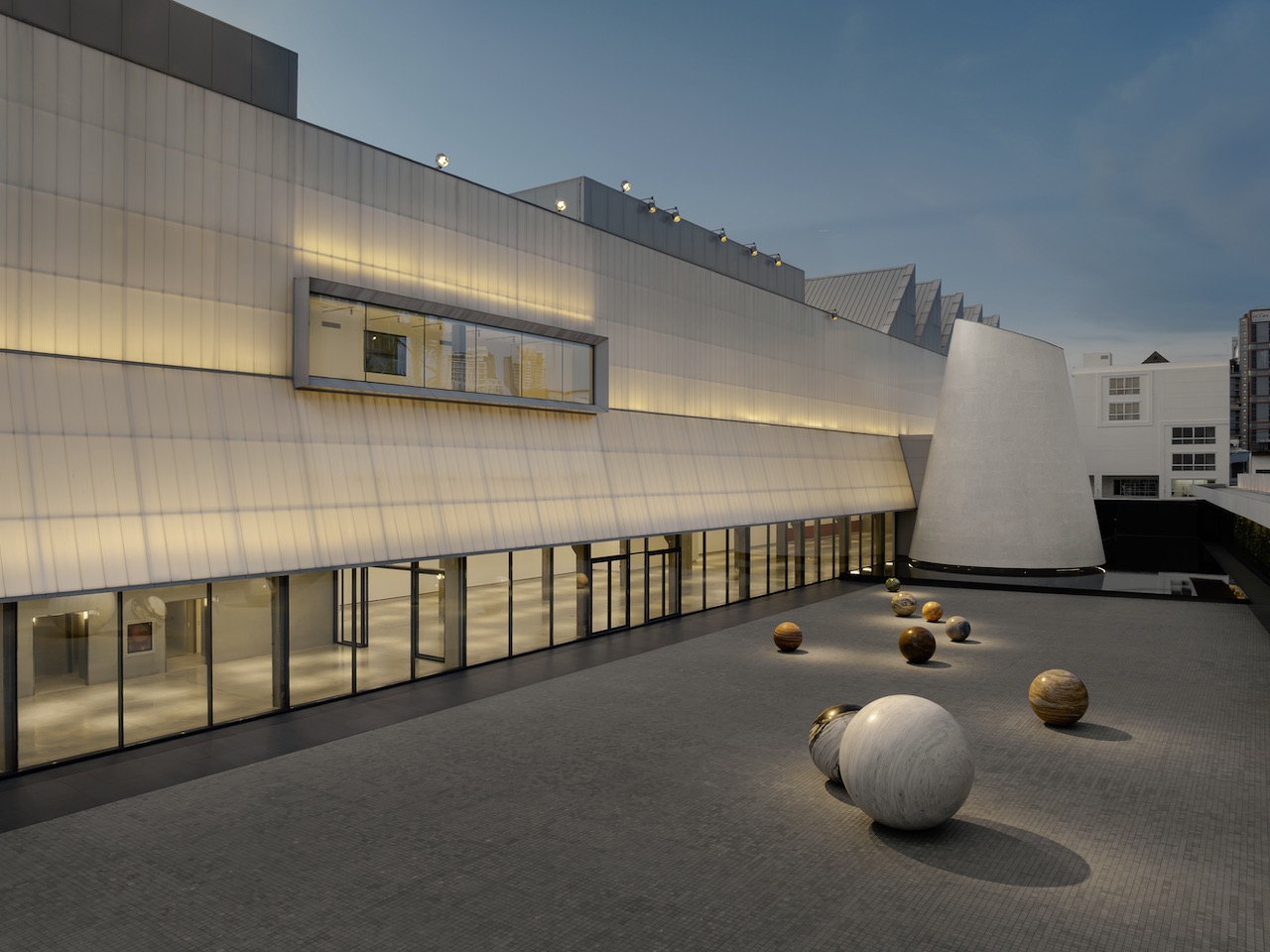 Dib Bangkok’s inaugural exhibition, “(I)nvisible Presence” running until 3 August 2026 is a solid test of the museum’s spaces; in the courtyard, Alicja Kwade’s Pars pro Toto (2020) installation of 11 monumental stone globes gives physicality to the enigma of planetary systems.
“With Dib Bangkok, WHY Architecture’s intent was to reflect the city’s evolving role as an international art destination, crafting a space that fosters dialogue among artists, curators, and the public while supporting both community engagement and creative exchange,” says Yantrasast. The development includes the adaptive reuse of a 1980s industrial warehouse. Dib is a Thai word meaning ‘raw’ or ‘authentic’. Thus, the museum’s name reflects the museum’s aspirations for honest expression both in the art and architecture, while referencing the typology.
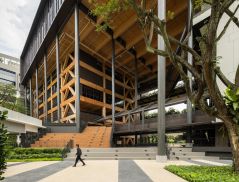
“The warehouse provided the opportunity to introduce a central courtyard, repurposing the existing structure into galleries while adding a service tower for loading, art handling, conservation labs and hybrid programme spaces. The courtyard functions as a public ‘living room’ – supporting performances, festivals, and everyday gathering – and positions the institution as a cultural centre as much as a museum,” explains Brian Butterfield, Director, Museum Workshop at WHY Architecture. “Culturally, the museum extends the legacy by bringing Thai artists into direct dialogue with international work, while also operating as more than a conventional exhibition space.”
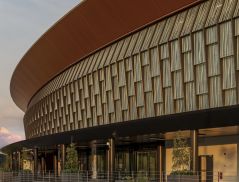
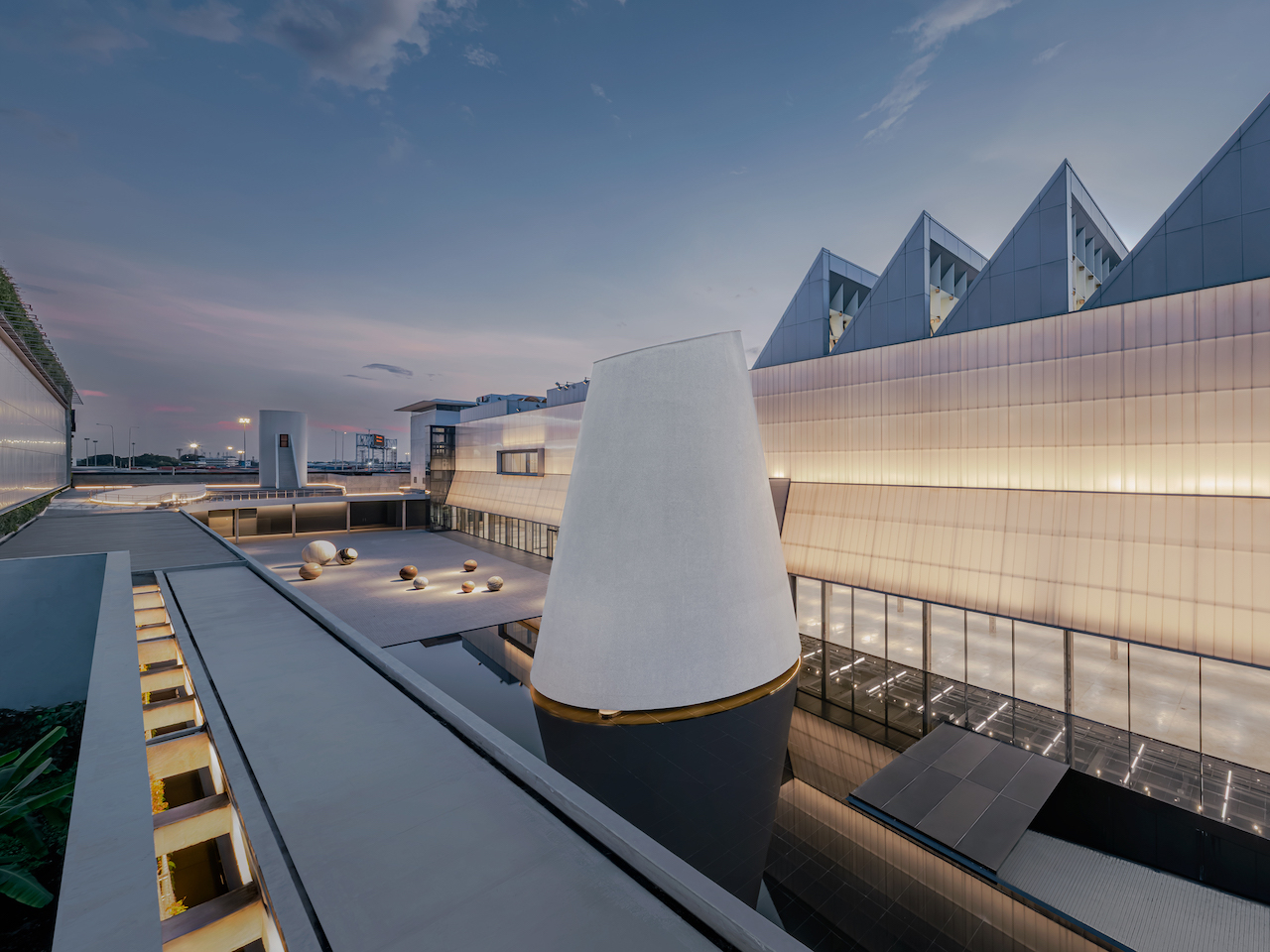 Energy-efficient solutions include daylight optimisation through skylights and strategically placed windows, the backlit polycarbonate façade that filters light to interiors, and permeable pavers and perimeter retention gardens to mitigate Bangkok’s intense seasonal rainfall, prevent flooding, and support its local ecosystem.
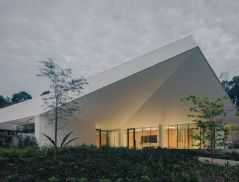
The warehouse is not a protected heritage building but retaining and adapting it was core to Dib Bangkok’s scheme. “The approach honours the existing fabric of the neighbourhood and the scale of the street, while introducing covered canopies and landscape as a contemporary response to the Thai climate,” says Butterfield. Its minimal scheme was inspired by the Buddhist concept of enlightenment of an upward journey, with the ground floor utilising austere concrete, the second being intimate and serene with a nostalgic Thai-Chinese window originating from the site, and the third oriented skyward, incorporating devices such as an iconic sawtooth roof at the building’s north side.
The layout works directly with the warehouse’s long, narrow proportions, “using linear movement as an organising principle,” Butterfield shares. On the second and third storeys, this is expressed through a series of smaller galleries along the building’s length, with circulation on each end. Adds Butterfield, “Within that, the galleries are varied in scale to accommodate different types of work – from more intimate rooms to larger top-lit spaces. The conical Chapel introduces a singular vertical volume that contrasts with the otherwise linear systems, while the courtyard creates a central spatial void that helps organise the building and recalibrates scale across the site.”
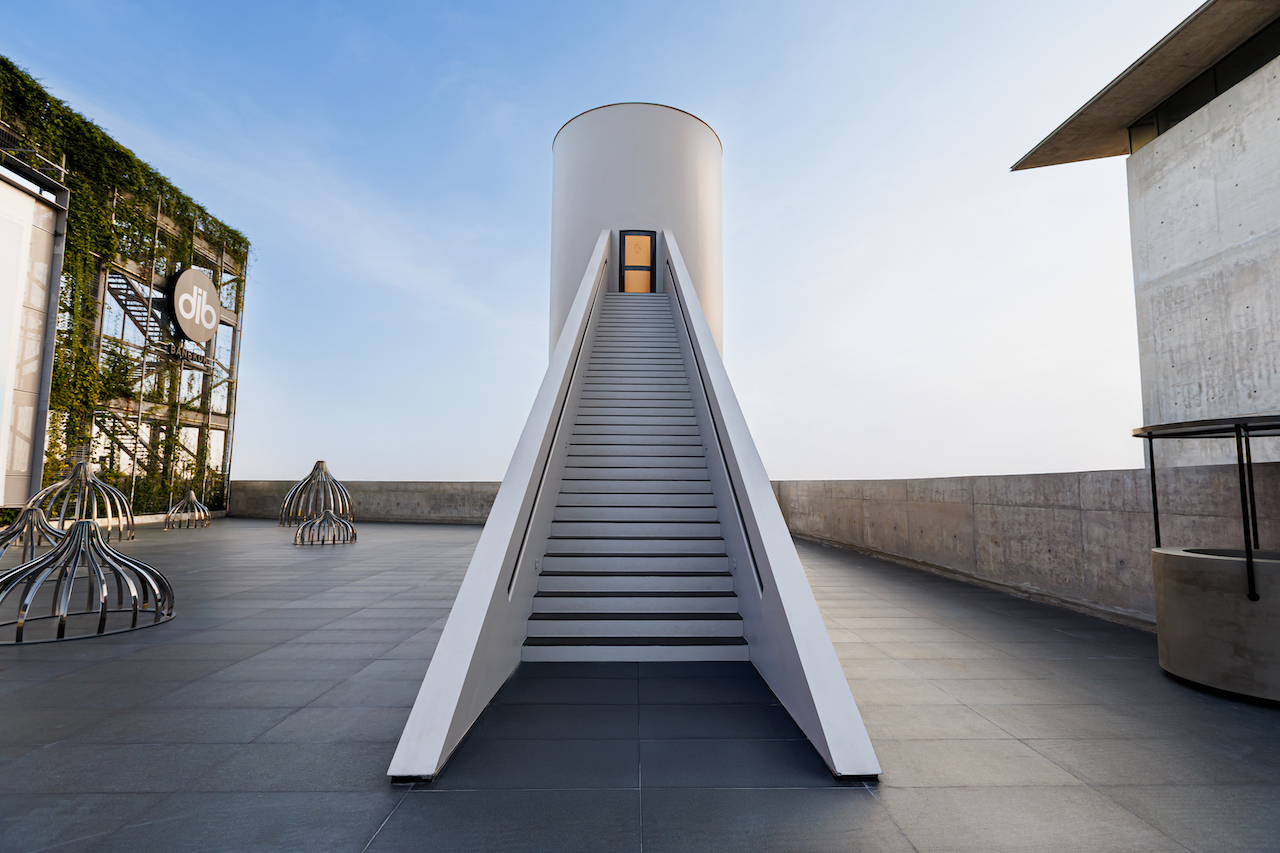 Straight Up installation by James Turrell
The flexible galleries facilitate different exhibition types and curatorial approaches. “Outdoor and semi-outdoor spaces also support site-specific work, including installations in the courtyard, terraces [for] sculptures, and a large billboard wall facing the adjacent highway for rotating artist commissions,” says Butterfield. The project highlights the potential of old buildings when approached with care and originality, without losing their original character. “It combines adaptive reuse with new construction and integrates local materials and climate-responsive strategies rather than relying on applied historical references,” Butterfield expounds.
He observes that visitors are using the spaces as intended – in an exploratory manner rather than through a fixed sequence. “While the inaugural exhibition is organised by floor, the building allows for multiple circulation paths from top to bottom, with the courtyard acting as a central point of orientation. Visitors move between galleries, outdoor spaces, and terraces, using sightlines and windows to understand the building and distribution of artworks across the site.”
This reflects the firm’s ethos that “art spaces should be spaces for cultural production and activation as much as they are spaces for the presentation of art.” The museum opened on 21 December 2025. In just three months, it has garnered accolades from the media and art fraternity. A good museum showcases art; a great one excites and becomes a vital foil for visitors to experience and remember its contents, bridging art and viewers, and removing hierarchies in favour of a shared experience of what art can bring to life. In this, Dib Bangkok is clearly the latter.