 Share
Share



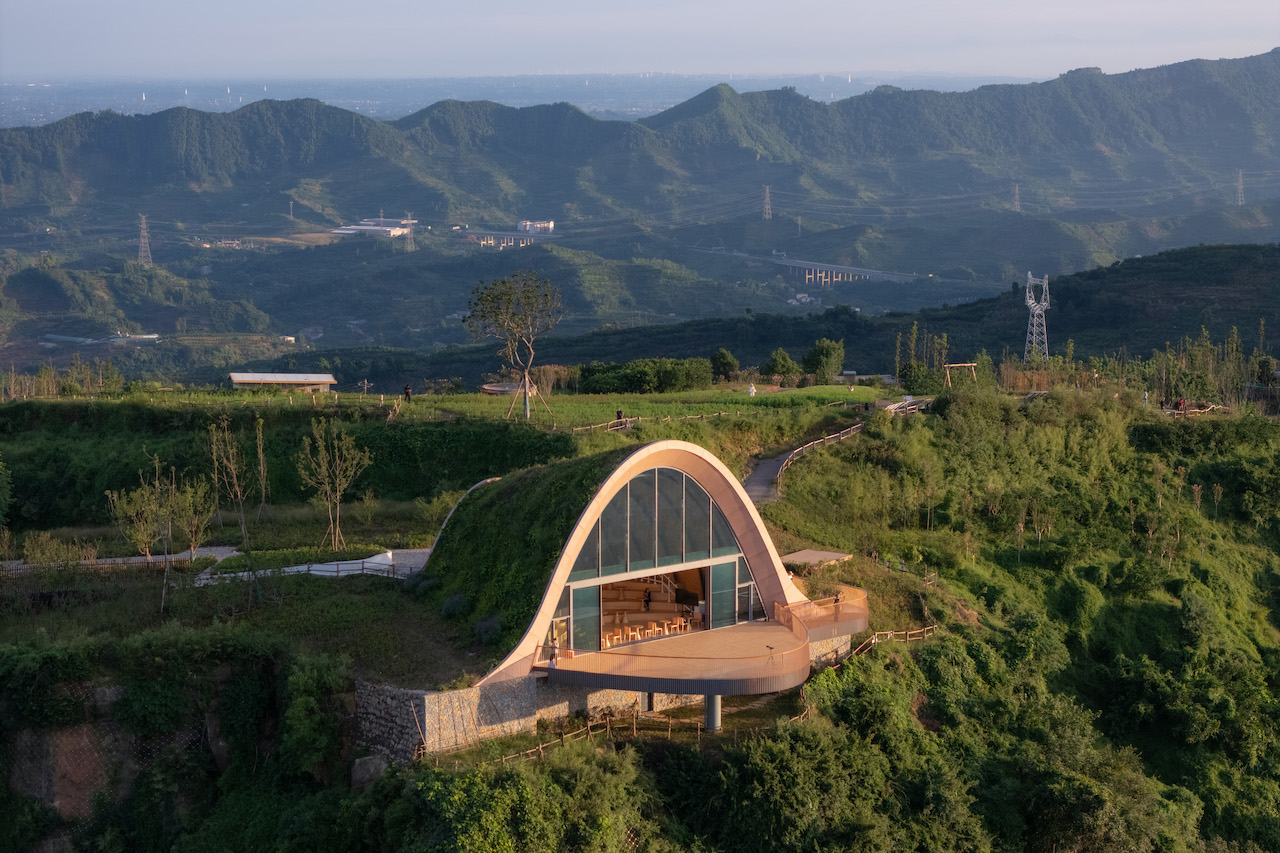
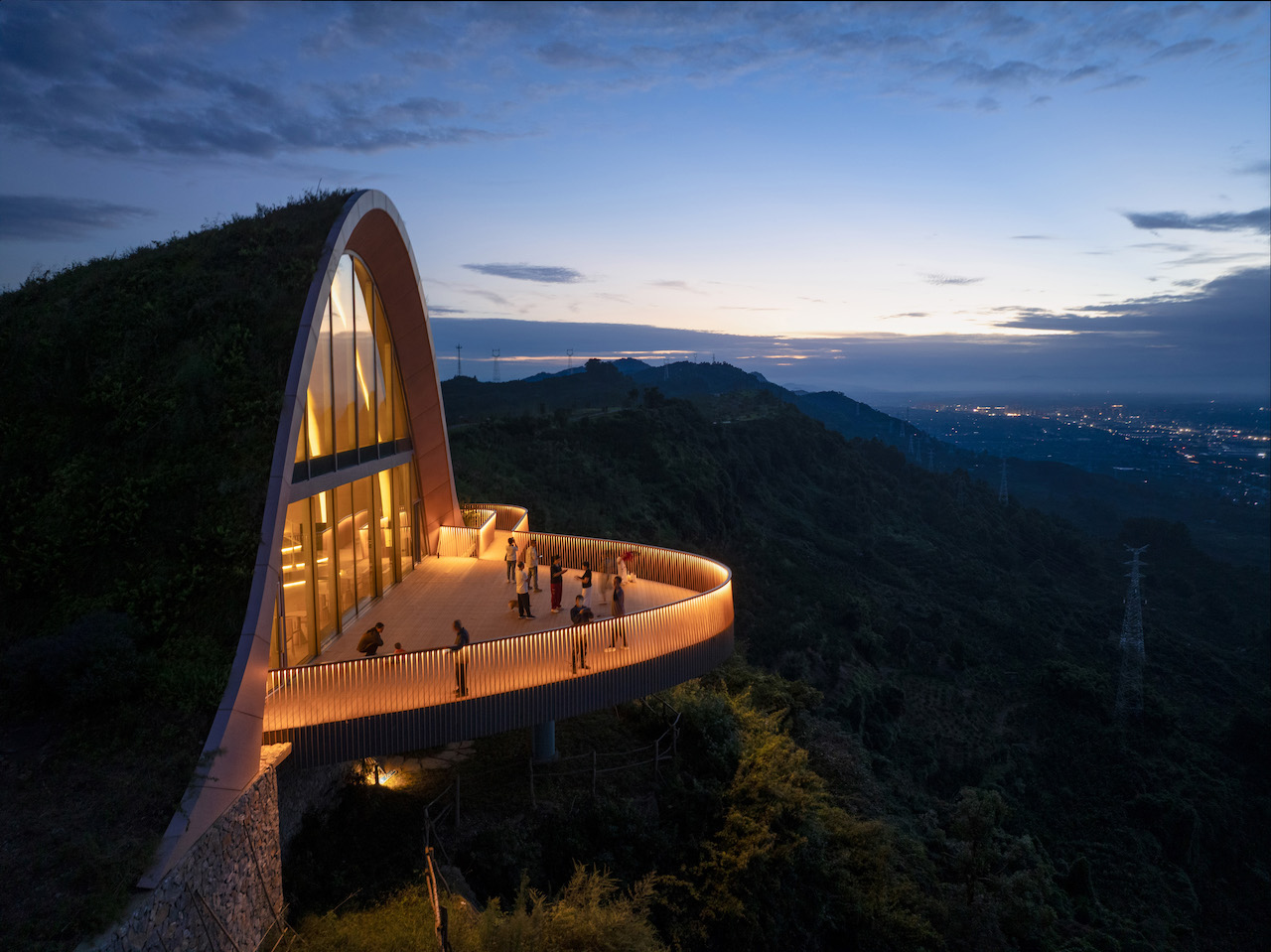
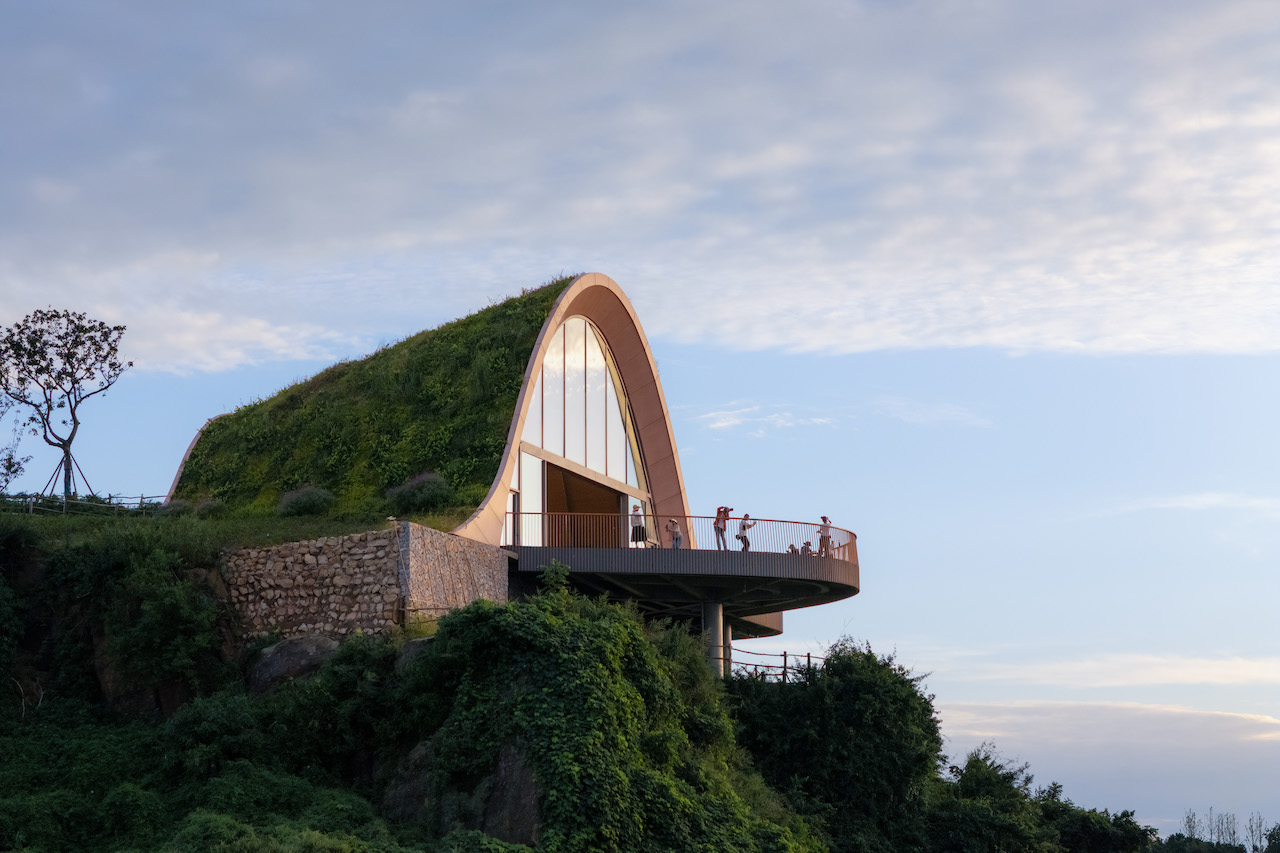
Pujiang is a new sustainable town currently being developed in southwest Chengdu, China. To the east of the city rise majestic hills, backed by the larger panorama of the Qionglai Mountain range. Dutch architecture firm MVRDV has made the peak of one particular hill even taller with the Pujiang Platform. The original mound had been previously flattened for a nondescript viewing platform; this new domed structure reinstates the former tip in abstract form while paying tribute to its origins.
Pujiang County Planning and Resources Bureau commissioned the new platform, expanding its purpose from a simple viewpoint to a venue capable of accommodating events ranging from weddings to government meetings. Landscaping wrapping the timber structure segues it into the surrounding greenery. “The hills of the region are truly a spectacular sight, so one of the challenges we faced was to make the most of those views while reducing the impact on the landscape,” says MVRDV’s founding partner, Jacob van Rijs.
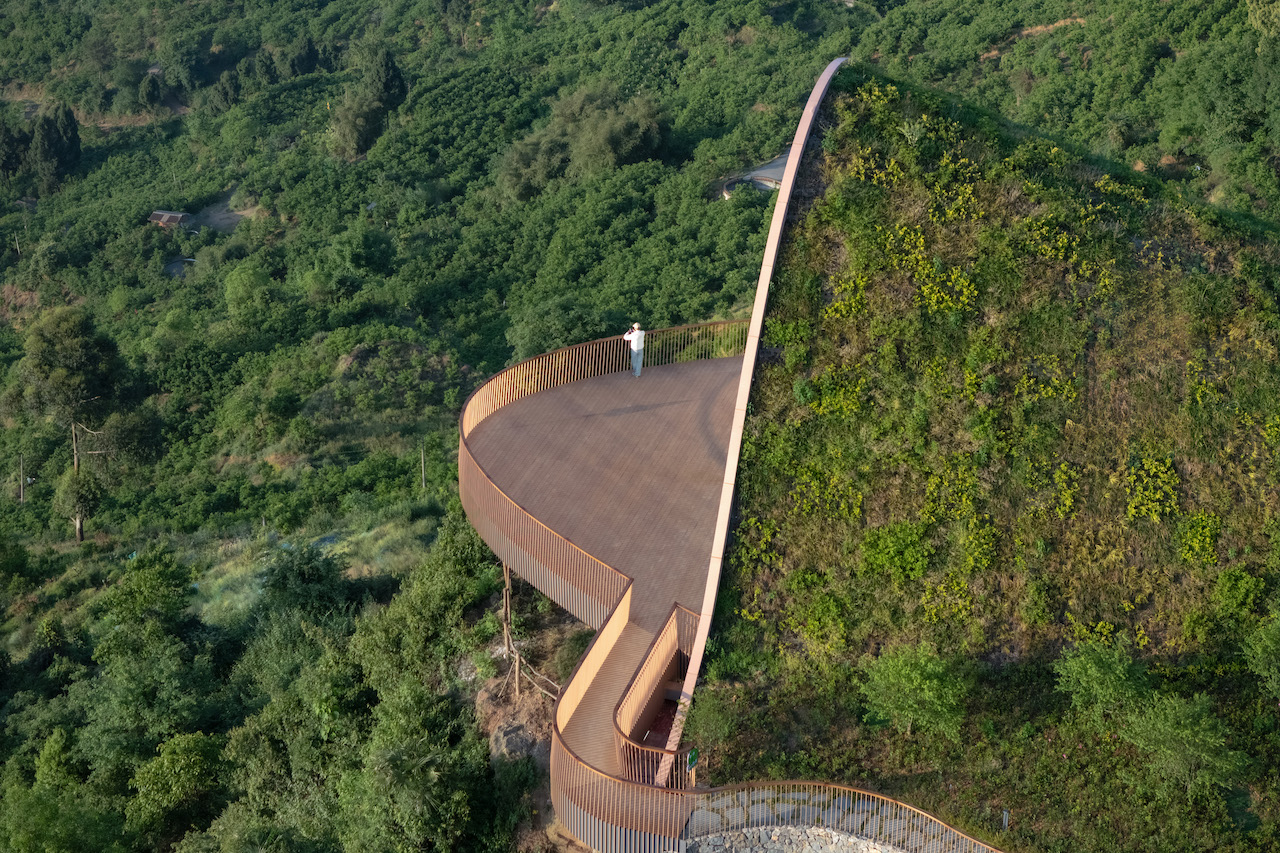
He elaborates, “By adding a hill-shaped pavilion with a green roof, we not only minimise our own impact, but we [also] recreated the hill that was there before. This act of preserving and respecting nature is the essence of the design, which is continued in the construction approach [that uses] bio-based materials like wood.” Such materials are more eco-friendly, reducing impact on the project’s natural environment.
Yihong Chen, a senior architect at MVRDV, explains that Pujiang - a key gateway to Southwest China, is renowned for its picturesque, idyllic landscaped, robust ecology, and strong agricultural heritage. She adds, “With a forest coverage rate of 53.1% and surface water meeting national level III standards, Pujiang is a national ecological demonstration county, a sanitation county, and a model for leisure agricultural and rural tourism.”
A Stage Set Within the Landscape
Visitors come to experience the region’s rich natural resources, including China-protected geographical indication (GI) products such as Pujiang Yacce Tea, Pujiang Kiwi and Pujiang ‘Ugly Orange’. But the views from Pujiang Platform also offer a local experience. Chen highlights that visitors can observe the city and mountain from the platform. From the plains below, the earth berm appears to merge into the existing landscape.
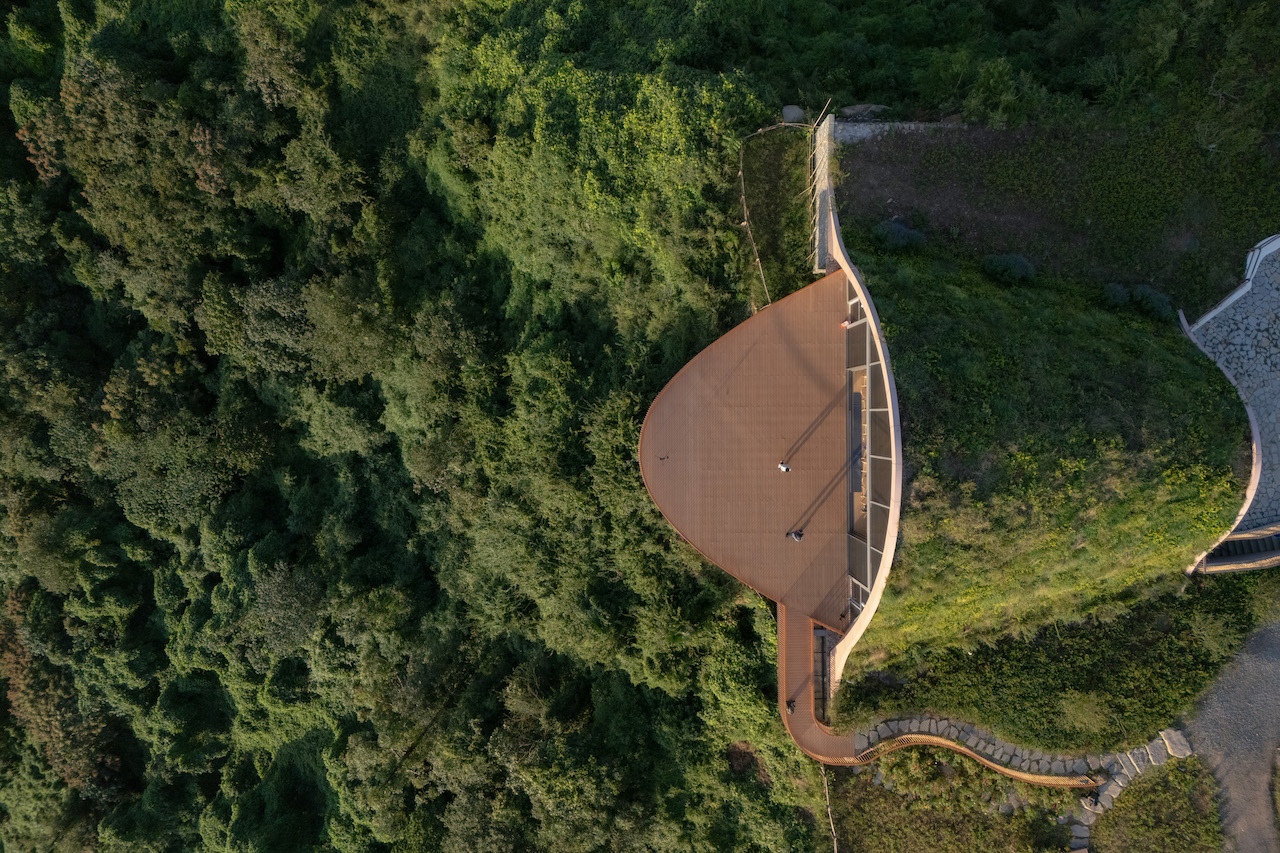
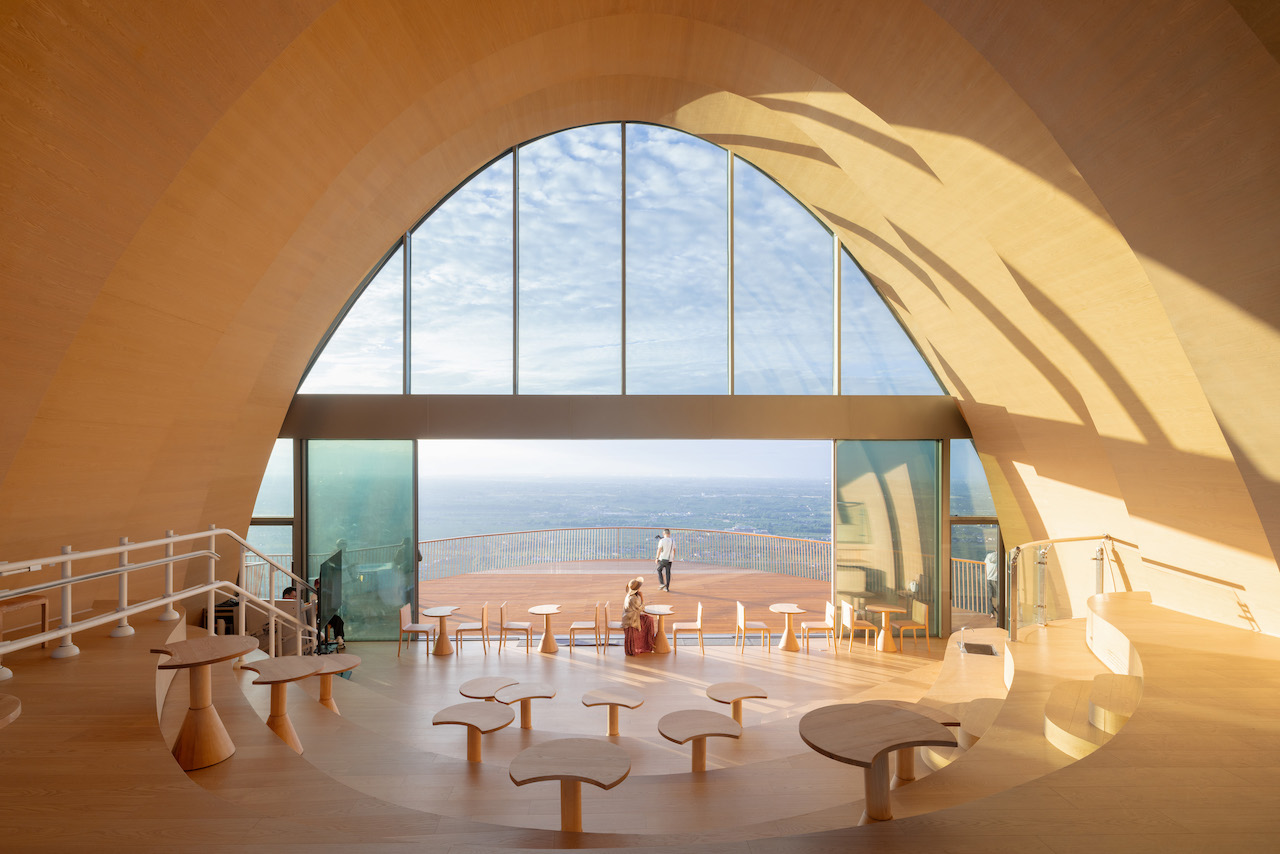
Visitors enter the structure from a small glass entryway on the building’s southwest side. Platforms tier downward, tracing the topography toward the cantilevering balcony beyond glass sliding doors. The procession augments the effect of the view at the end of the sequence. The architecture team envisioned the arena as an ideal setting for presentations or simply for visitors to take in the landscape through the 10m-tall glass façade. To harness existing natural conditions and elements including the area’s biodiversity, the earth berm was given a 10cm depth – sufficient to support a wide variety of grasses, flowers, and small bushes. Existing waterways are also used for rainwater collection and irrigation to allow the plants to flourish.
The structure draws from nature. Explains Chen,” We used glued laminated timber (glulam) with white pine. Timber veneer was used for the internal walls and ceilings, timber floorboards for the floor. There was no special treatment for the structural timber surface as we wanted to minimise carbon emissions and also because the structures are hidden behind the ceiling arches.” Despite its benefits in reducing carbon emissions, the use of wood structures has not yet been widely accepted as regulations are not yet in place. Thus, its use in this project sets a precedent.
Building a Pavilion on the Edge
Chen speaks of other challenges in realising Pujiang Platform. “The site is situated along the ridge of a mountain with steep slopes and significant terrain height changes, which made delivery [of materials] and construction difficult,” she says.
The timber arched structure, with a tip at 11m and a 10m cantilevering deck over a steep hill required extensive coordination between various teams, with MEP (Mechanical, Engineering, and Plumbing), facade, and safety considerations. She adds, “The location’s high moisture levels and the green roof covering the building [also] necessitated [considered] waterproofing design.”
In particular, the arched roof posed challenges for MEP ducts, requiring meticulous system design. Chen elaborates on other technical difficulties: “The main façade uses a curtain wall system with oversized glass panels and ultra-slim, six-panel sliding doors, which required close collaboration with the door manufacturer and structural engineer to optimise the design and minimise the façade thickness.”
Pujiang Platfrom was designed not in isolation but as a point in an existing pathway. The team improved the network of paths leading to the pavilion and conceived multiple routes, including a secondary viewing platform accessed via a twisting, turning staircase that culminates at the top with a 360-degree view of both near and distant sceneries.
Beyond aesthetics, sustainability also plays a key role. The greenery covering the earth berm provides significant insulation and thermal mass, helping to reduce the effects of temperature fluctuations. A layered ceiling allows natural ventilation to cool the interiors, while the north-facing window orientation minimises solar gains. A roof overhang and surrounding trees protect the smaller entrance wall from direct sunlight. A geothermal heat pump also addresses a portion of the pavilion’s energy requirements.
Together, these sustainable credentials and strategies, and the platform’s design reflect Pujiang’s broader eco-conscious ambitions.