 Share
Share



In Bhadohi, Uttar Pradesh, Northern India – often referred to as the country’s carpet capital – is where Hands draws both its origins and its enduring philosophy. Founded in 1881 by A. Tellery, the business was later passed down to the Patodia family, and is now driven by the second generation of Patodias.
The company has since grown into a global name in luxury carpets, with commissions spanning palaces, luxury hotels, private residences and landmark projects. The brand is well known for its exceptional hand-knotted and hand-tufted carpets, including the world's finest hand knotted carpet with 4,900 knots per square inch, and the world's largest handmade carpet, a 12,000 sqm carpet commissioned for The Grand Mosque of Nur-Sultan, Kazakhstan, the largest mosque in Central Asia.
Hands introduces new collections every season, including Transitional, Contemporary, Art Deco, Floral, and Traditional, as well as bespoke designs. Yet, its identity remains firmly rooted in craft rather than scale. The carpet is not merely a finished artefact, but a vessel of continuity.
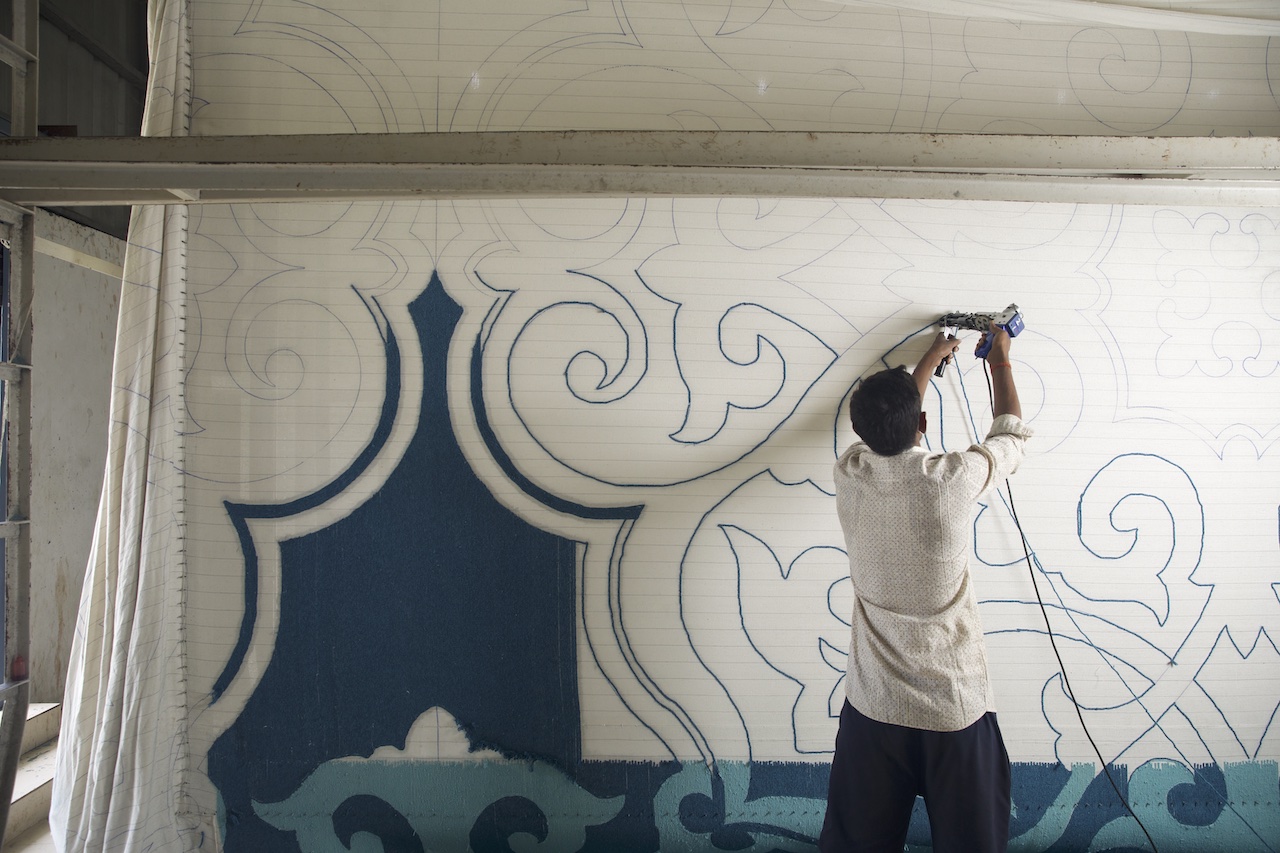
“Heritage for us is not something we look at in the past tense. It is something we live with every day,” says Managing Director Apurva Patodia. “When you work with a craft that has been practised for generations, you realise that you are only a small part of a much longer journey. At Hands, we see ourselves more as custodians of the craft rather than just producers of carpets. The philosophy has always been simple – respect the tradition, but allow it to evolve with time. Our job is to make sure the craft stays alive, relevant, and meaningful for the way people live today.”
The Soul of Bhadohi
Bhadohi is not simply a place of production; it is the foundation of the brand’s identity. The Uttar Pradesh region has long been synonymous with carpet weaving, supported by generations of artisan families for whom the loom is part of everyday life.
“Bhadohi is the soul of what we do. It is often called the carpet city of India, and for good reason. Generations of families there have grown up around the loom, learning the craft almost as a way of life. For us, the connection to Bhadohi is not just geographic, it is cultural and emotional,”shares Patodia.
He continues, “The knowledge of weaving, dyeing, and finishing comes from people who have spent their lives perfecting it,” he adds. “That human connection to the place is what gives authenticity to every rug we create.”
The Anatomy of a Carpet
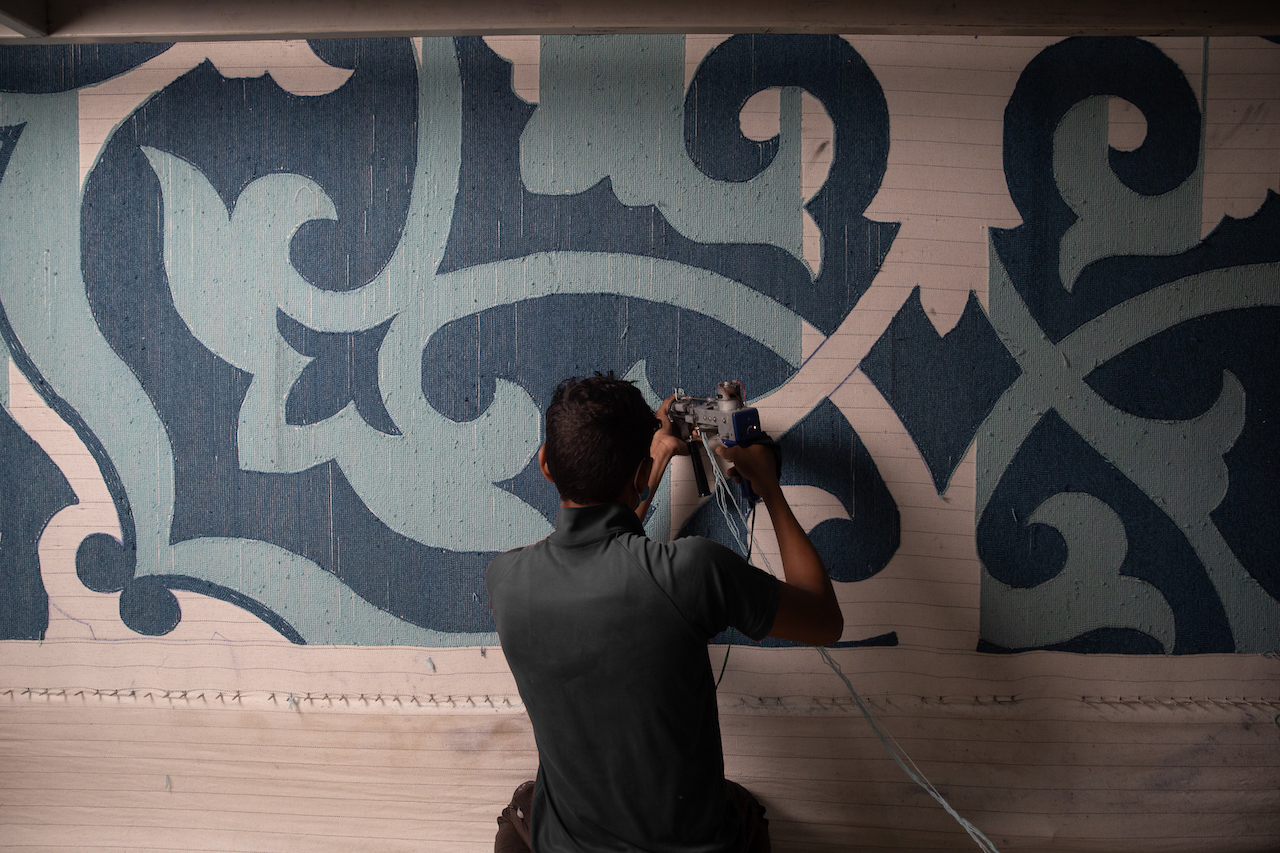
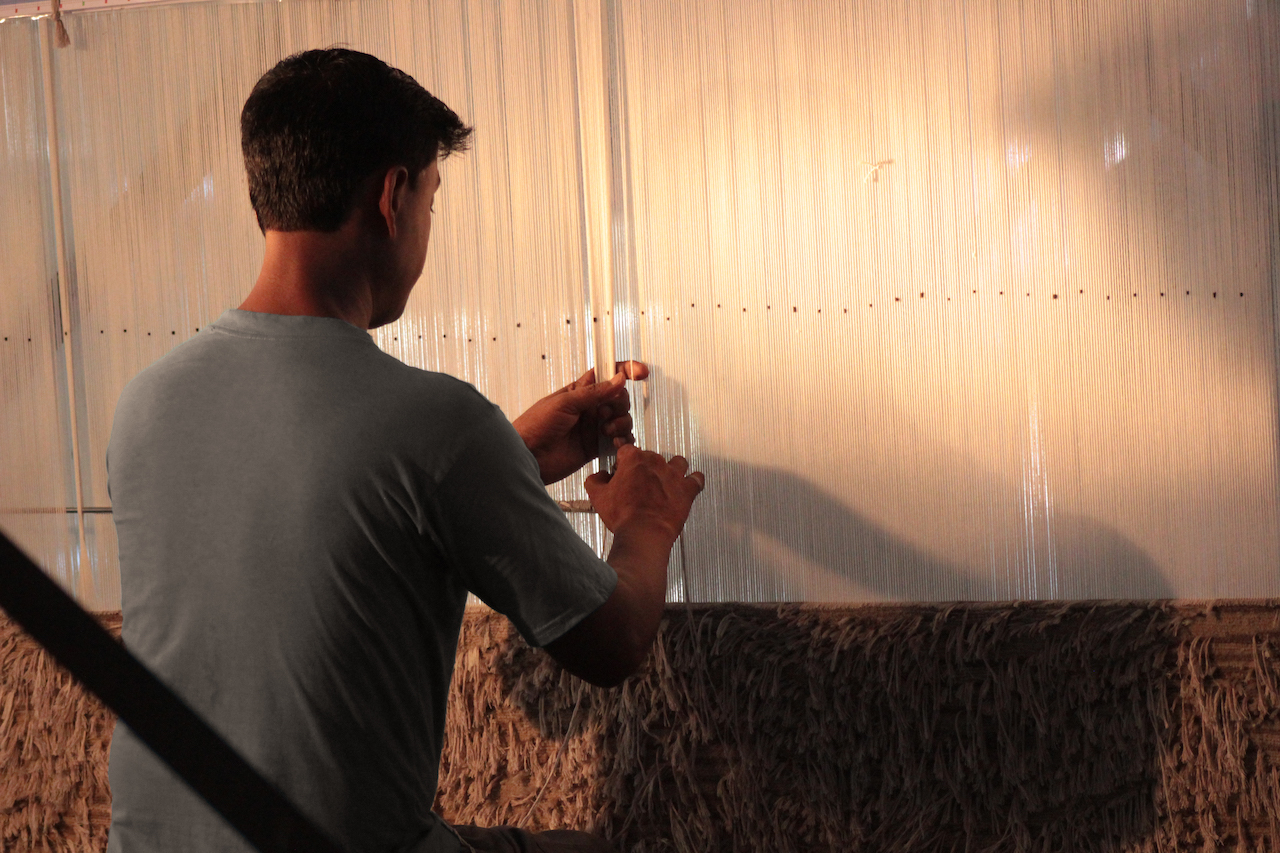
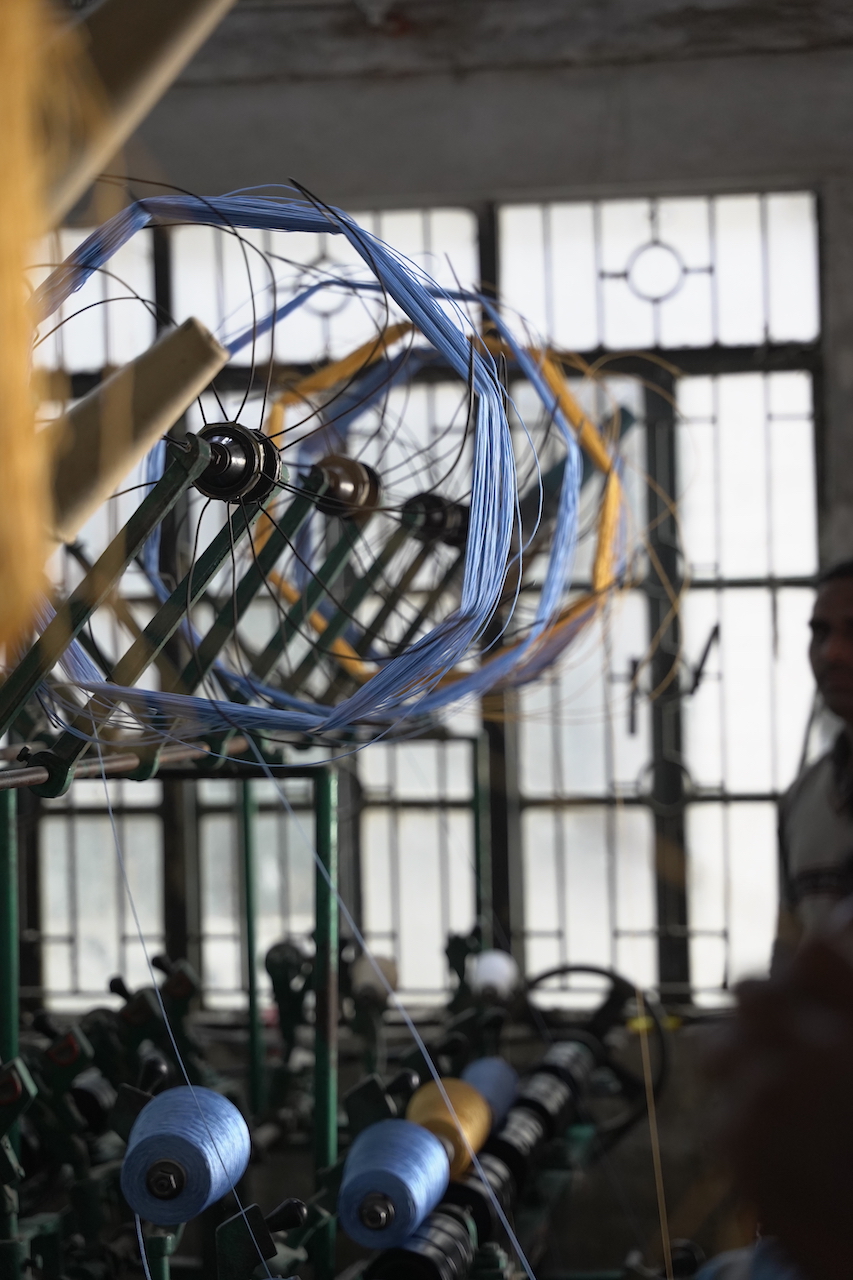
The making of a hand-knotted carpet is methodical and time-intensive. “It begins with an idea; sometimes inspired by architecture, sometimes by history, and sometimes by something as simple as a texture or a colour. That idea is translated into a design map which guides the weaver knot by knot. From there, the process is incredibly detailed. The yarns are dyed, the loom is prepared, and the weaving begins. Each knot is tied by hand. Depending on the complexity, a single rug can take months to complete,” explains Patodia.
The labour is exacting, but what distinguishes the finished piece is not perfection in the industrial sense, but in the variation. “What makes it special is that every piece carries the mark of the person who made it,” he continues. “The small nuances in texture or tone are what give the rug its character. That human element is something machines can never replicate.”
In an industry increasingly shaped by automation, such distinctions are becoming ever more significant. They point to a different understanding of value rooted in individuality.
Sustaining Craft and Community
The future of hand-knotting depends as much on people as it does on technique. Like many traditional crafts, it faces the challenge of attracting younger artisans willing to commit to a demanding, long-term discipline.
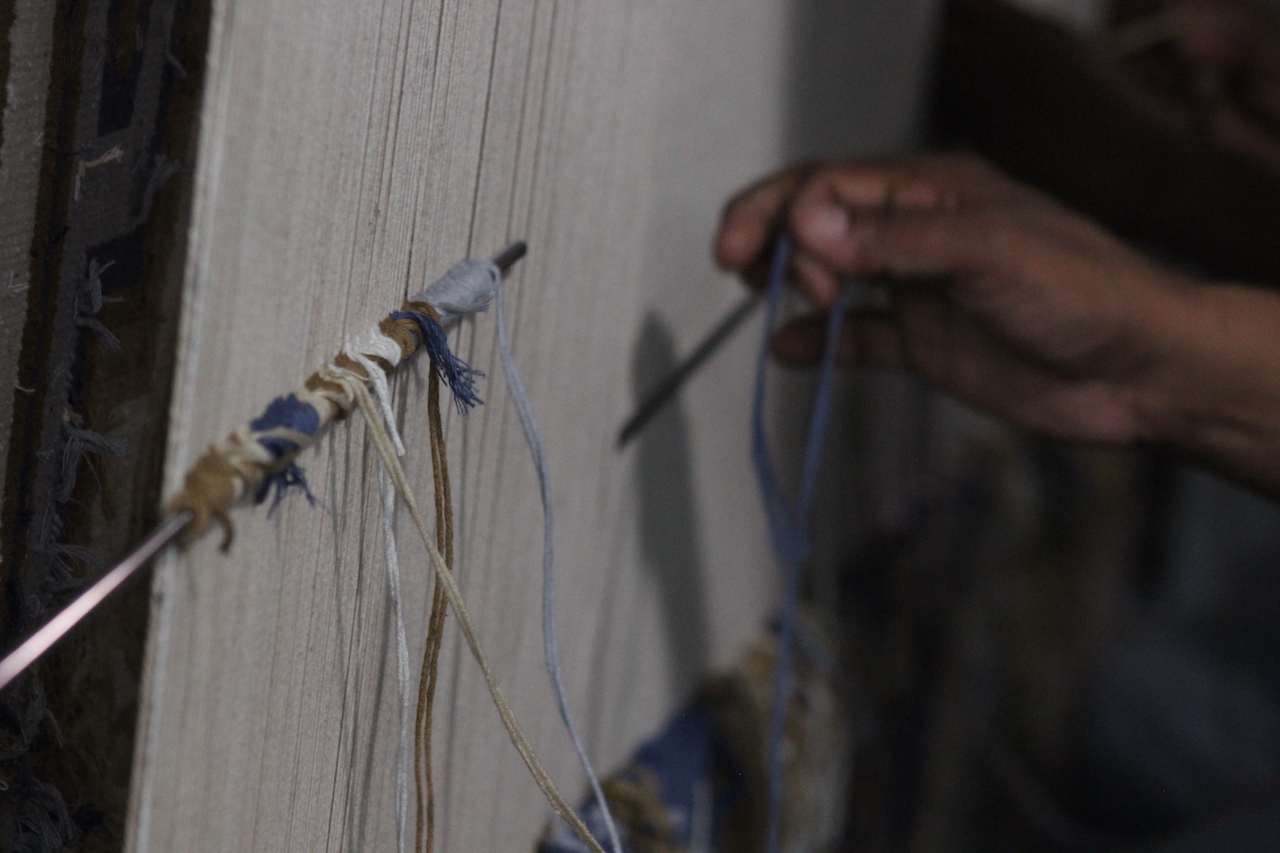
“Weaving is a craft that demands patience. A master weaver may spend years learning before reaching the level of skill needed for fine carpets. For us, supporting the community means ensuring that the craft remains a dignified and sustainable livelihood,” says Patodia.
“We work closely with weaving families, providing consistent work, fair wages, and training opportunities for younger artisans. But beyond that, it is about respect for the craft itself. When younger generations see their work appreciated around the world, it gives them a sense of pride in continuing the tradition,” he adds.
This emphasis on pride and ownership extends into the creative process itself. This fosters a deeper connection between maker and material. “We also encourage creativity within the craft, allowing artisans to feel connected not just to the technique but also to the design process. When people feel ownership in what they create, the craft naturally continues,” shares Patodia.
Tradition in Transition
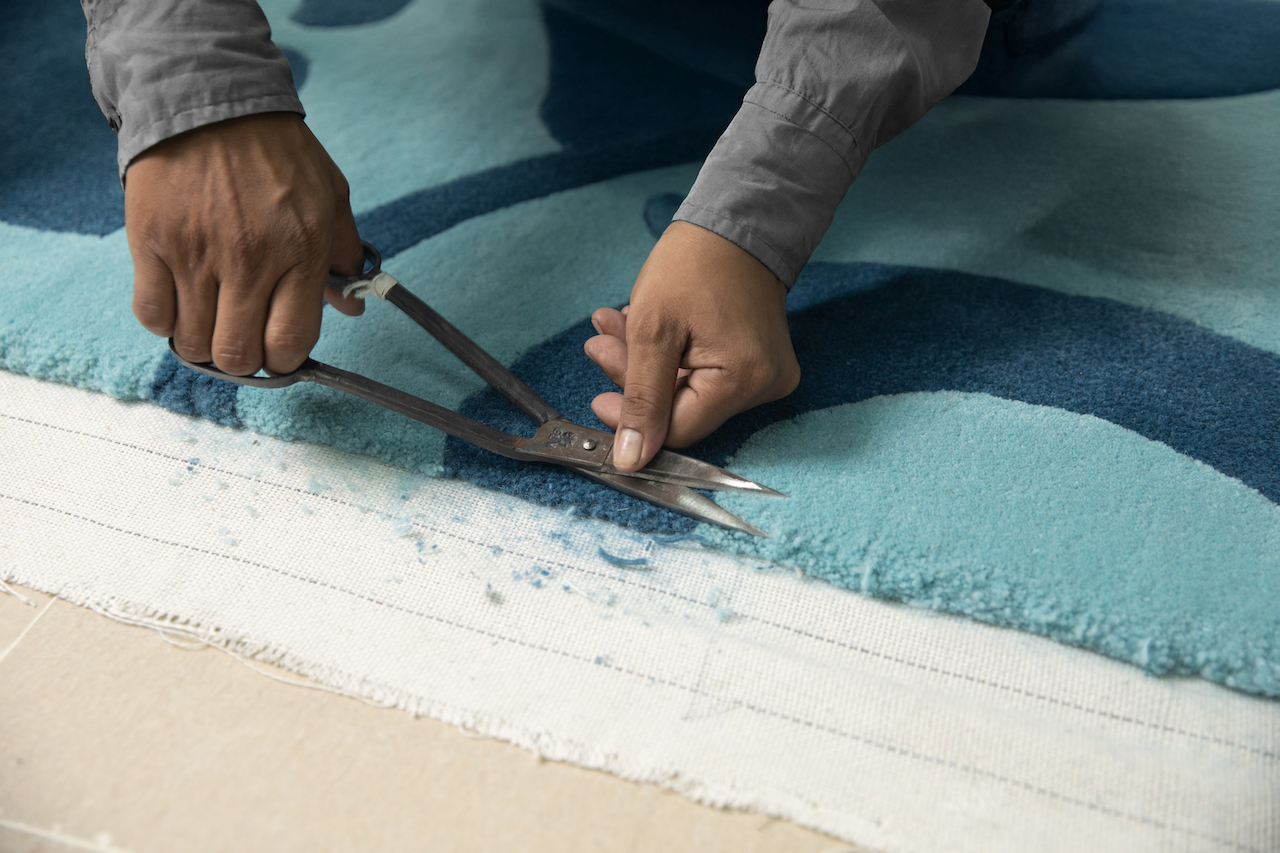
While the techniques of hand-knotting have remained largely unchanged for centuries, design continues to evolve.
Patodia points out, “A hand-knotted carpet is still made the same way today as it was generations ago. What evolves is the design language. We work with designers, architects, and our internal creative team to interpret traditional craftsmanship in ways that resonate with contemporary interiors. Sometimes that means experimenting with texture, scale, or colour,” he tells.
The result is a body of work that spans classical and contemporary aesthetics without compromising on method.
The Bespoke Conversation
Bespoke commissions form a significant part of Hands’ practice, often resulting in its most exploratory work. In these projects, carpets are conceived as integral to the spatial narrative rather than as standalone pieces.
Patodia observes that bespoke work is where the most interesting conversations happen. “Architects and designers approach a rug as part of a larger story within the space. Our role is to translate their vision into something that works within the craft of weaving, technically and aesthetically. Often these collaborations push us into new territories of texture, construction, or material. In many ways, some of our most innovative pieces come from these partnerships,” he says.
Defining Success
For a company with such a long lineage, the question of success takes on a different dimension. It is not measured solely in growth or market presence, but in continuity.
“I think it is a balance of both,” Patodia reflects, referring to preservation and innovation. “Preserving the craft is essential because without the artisans, the tradition itself disappears. At the same time, innovation keeps the craft relevant to modern interiors and new generations of collectors and designers.”
But beyond these dual imperatives lies something more intangible: relationships. For him, success lies in the long-term trust shared with artisans, designers, and clients around the world.
The Future of Craft
As the definition of luxury shifts, craftsmanship is becoming central once again.
“I believe craftsmanship will only become more important,” Patodia says. “In a world where so much is mass produced, people are increasingly drawn to objects that have a story and a human connection.”
This shift is already visible in the way carpets are being positioned within interiors—not simply as decorative elements, but as anchors of atmosphere and meaning.
“A handmade carpet carries time, patience, and the touch of the artisan. It brings warmth and depth into a space. True luxury today is not just about rarity, it is about authenticity and emotion. Craftsmanship embodies both.”
In this sense, the enduring relevance of Hands lies in its ability to adapt – preserving the integrity of craft while allowing it to evolve with the way people live today.
Impaint — Painting Underfoot
At India Design ID 2026 in New Delhi, Hands unveiled Impaint, a new collection that extends its ongoing dialogue between craft and contemporary expression. Comprising eight designs presented in multiple colourways, the collection draws from the language of painting—though not in the conventional sense.
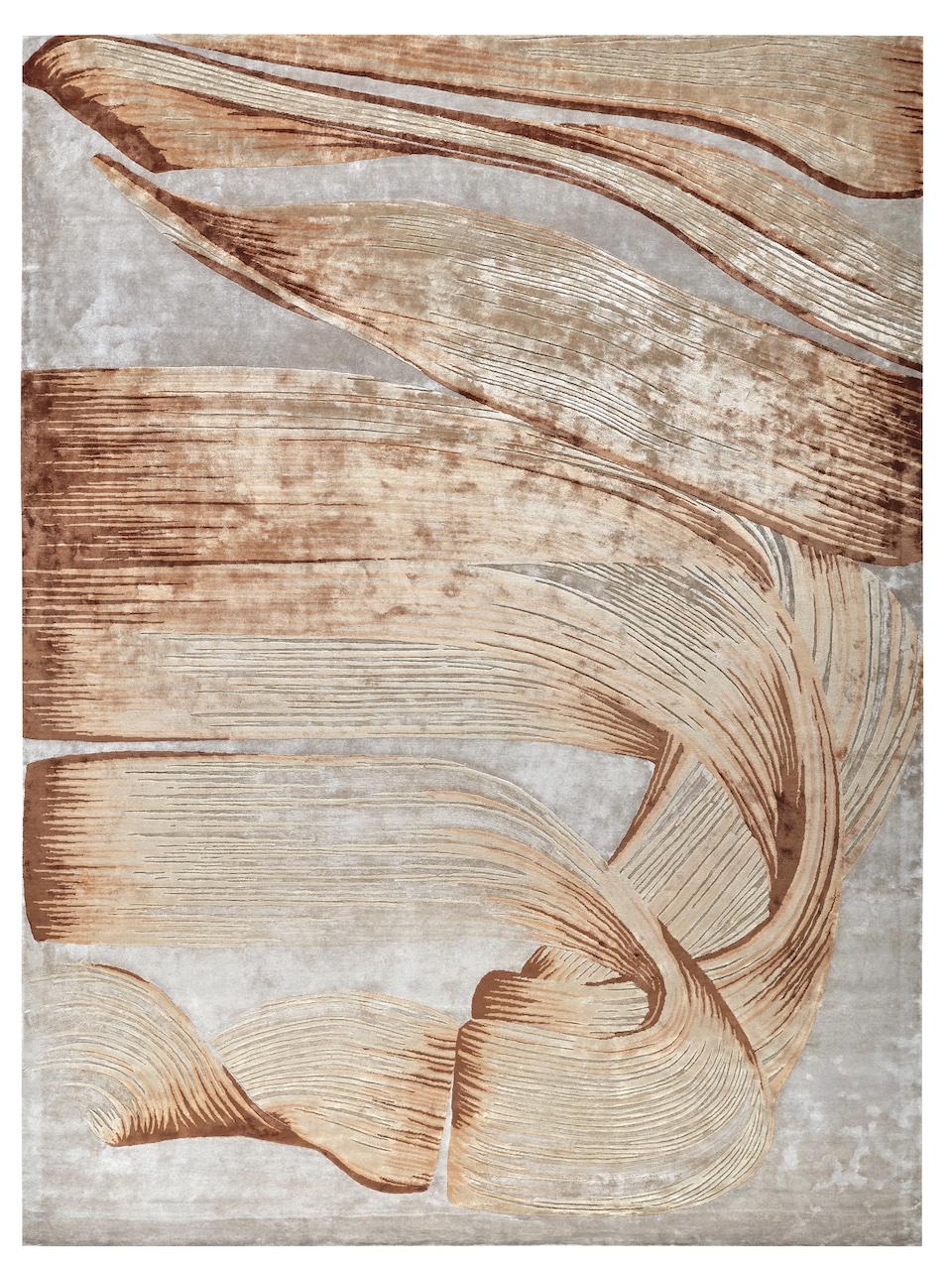
Rather than translating imagery into pattern, Impaint focuses on the act of painting itself. The brushstroke becomes its central motif, explored through repetition, layering and variation. Each rug examines how gestures accumulate over time, building depth and atmosphere through subtle shifts in density.
Hand-knotted in 100% Botanical Silk, the pieces possess a distinctive tactility. The “paint” appears embedded within the surface rather than sitting atop it, achieved through nuanced control of pile height, texture and tonal gradation. As light moves across the surface, these layers reveal themselves gradually, inviting closer inspection.
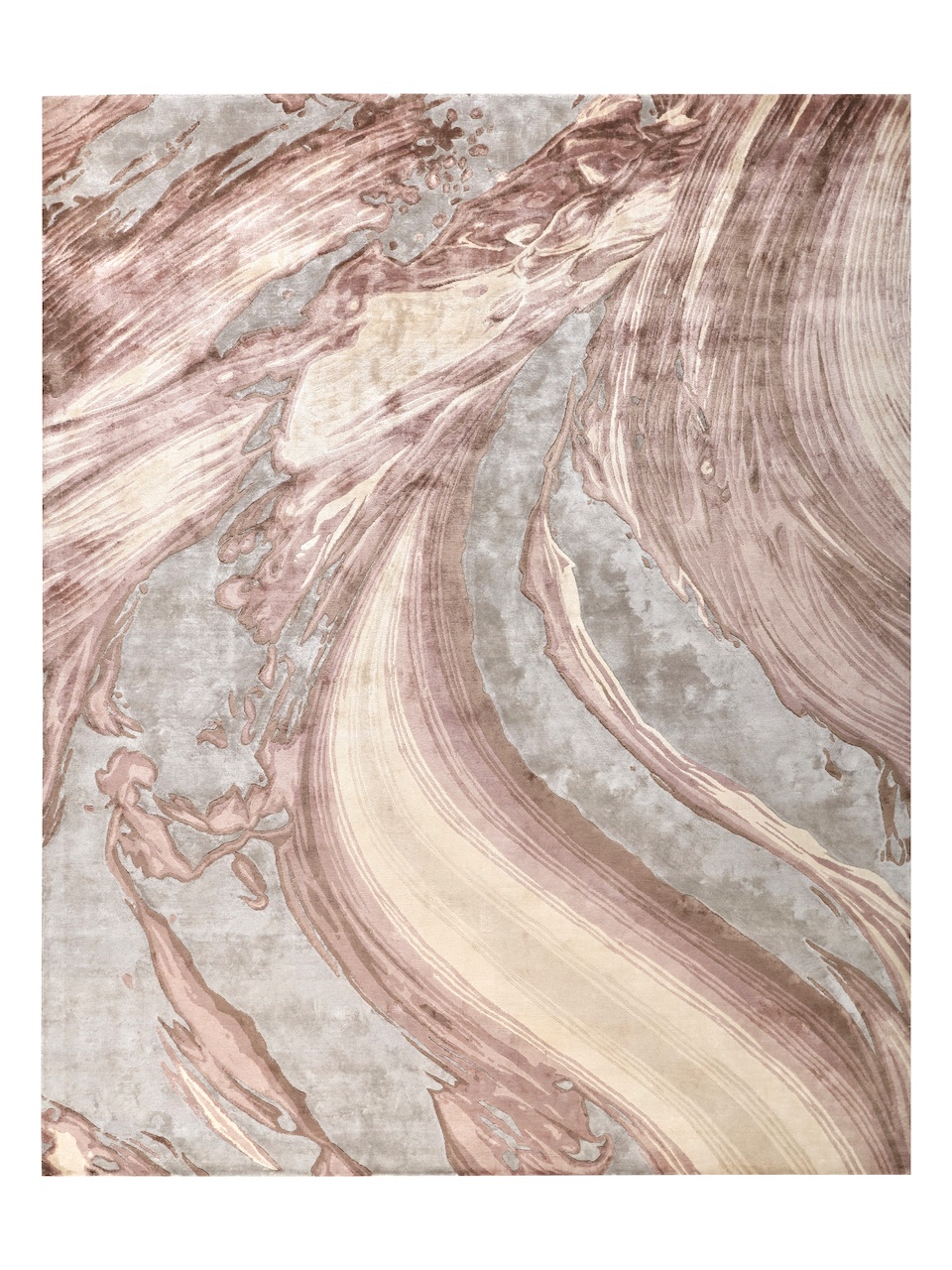
The collection resists overt narrative or spectacle. Instead, it operates through restraint —allowing meaning to emerge slowly, through repetition and return. No single element dominates; rather, the composition is held in balance.
In positioning the carpet as an architectural surface rather than a purely decorative object, Impaint underscores Hands’ evolving approach to design. It is a collection that invites interaction—not just to be seen, but to be lived with, walked upon and experienced over time.
Hands has a retail presence in India, Dubai, and Singapore, offering customers access to the finest carpets in the world. To find out more: https://handscarpets.asia/